In scattered clearings across the Sathyamangalam Tiger Reserve, small groups move through thickets that were once difficult to enter. They cut, pull, and uproot a plant that has tightened its grip on this landscape for decades: Lantana camara.
What was once impenetrable is now being opened up, patch by patch, by the very communities that have lived alongside these forests for generations.
At the centre of this shift is TAMS Tribal Green Fuels Private Limited, a tribal-led enterprise turning Lantana camara, one of the world’s most aggressive invasive plants, into industrial fuel. Through this work, conservation, livelihood, ownership, and restoration are being brought into the same system.
Since beginning operations in May 2024, the company has sold 808 tonnes of lantana briquettes, supported around 350 tribal members through regular livelihood opportunities, and cleared nearly 150 acres within the core area of the reserve.
/filters:format(webp)/english-betterindia/media/media_files/2026/05/06/img_7446-2026-05-06-19-37-58.jpg)
In total, including short-term and restoration-related work, employment has reached around 430 people.
The model is simple: remove a species that chokes forests, convert it into a marketable energy source, and ensure that the value generated flows back to the community and the land.
Why lantana matters to the forest
Introduced to India in the 1800s as an ornamental plant, lantana later escaped gardens and spread across forests. According to a 2020 study reported by Mongabay India, lantana occupies nearly 40% of India’s tiger habitats, covering over 150,000 square kilometres.
In Sathyamangalam, an expanse of 1,408 square kilometres that connects the Western and Eastern Ghats, its presence has reshaped the forest floor.
/filters:format(webp)/english-betterindia/media/media_files/2026/05/06/lant8-2026-05-06-19-38-39.jpg)
The plant forms dense, woody thickets that block sunlight and alter soil chemistry, making it difficult for native grasses and shrubs to grow beneath it.
As grazing grounds shrink, herbivores lose access to food, predators follow changing prey patterns, and communities find it harder to access forest produce. Over time, the forest begins to function differently.
How removal turns into revenue
The TAMS model works at multiple levels, with decentralisation at its core.
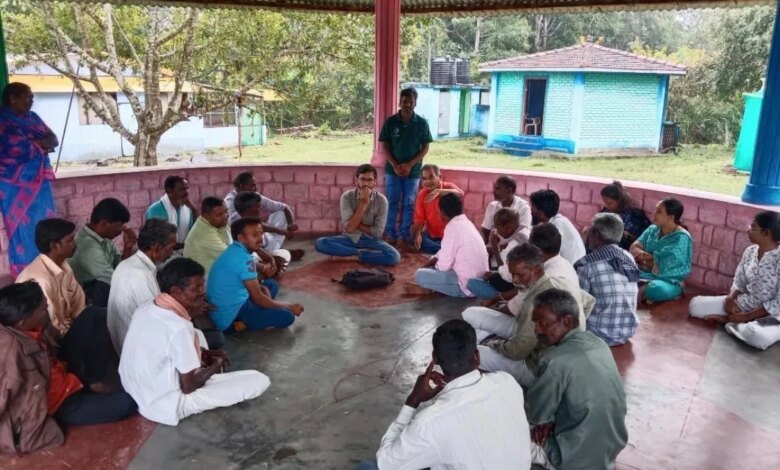
Removal begins at the village level. Tribal shareholders from the communities organise teams to uproot lantana and remove its roots to prevent regrowth. The biomass collected is then transported, processed into briquettes, and sold to industries as an alternative energy source.
WWF-India tested the viability of this model through a techno-economic assessment, which found that lantana briquettes could deliver a calorific value of more than 4,800 kcal per kilogram, placing them in competition with conventional biomass fuels.
/filters:format(webp)/english-betterindia/media/media_files/2026/05/06/lant5-2026-05-06-19-39-12.jpg)
With support from Startup Tamil Nadu, the state’s nodal agency for entrepreneurship, the enterprise secured Rs 1.5 crore in equity funding, along with additional debt support.
Today, 30 tribal shareholders anchor the company’s work. While TAMS’ total outreach covers 75 tribal villages and nearly 100 non-tribal hamlets, its business model is currently structured around 47 core operational villages.
The structure matters as much as the output.
“There are 30 shareholders, and each of them represents a cluster of villages, about 47 villages in total. The model works at the village level. Each shareholder organises the removal process within their cluster and leads small, local enterprises around it. This ensures that ownership is not centralised, but distributed across communities,” says Steffan Ajay R J A, Associate Coordinator at WWF-India.
This distribution of control helps the model move across villages while staying rooted in local leadership.
Livelihoods rooted in the forest
For communities here, the forest has always been central to livelihood, identity, and everyday life.
Mathavi M, Director at TAMS, explains how the enterprise creates income on the ground.
“Daily wages are provided for lantana removal, and in each village, the shareholder leads that effort. Once the lantana is removed, it is transported to the company where it is processed into briquettes. At the briquetting unit, about 10 people are employed directly. Alongside removal and production, we are also investing in restoration,” she says.
/filters:format(webp)/english-betterindia/media/media_files/2026/05/06/ba9872f9-2797-419e-a872-dbcd795f421f-2026-05-06-19-39-53.jpg)
In some villages, the change has also meant new roles for women.
“Women who started with lantana removal are now coordinating work groups and tracking payments. That kind of transition, from labour to leadership, is something we didn’t see earlier,” Mathavi adds.
The numbers suggest scale, but the change is also personal. Work that was once seasonal and uncertain is now part of a structured system. Payments are regular, roles are defined, and the forest becomes both workplace and partner.
Beyond fuel: A push to restore the forest
For Aiyyasamy, Director of TAMS and President of the Tribal Gram Sabha in Ittarai village, the work goes beyond income.
“If lantana continues to grow unchecked, it changes the hydrology of the forest and depletes soil nutrition. Grazing lands disappear, not only for livestock, but also for wild herbivores. What we are doing goes beyond removal. We are removing lantana from the roots so it does not return easily, and we are restoring the land alongside.”
In this model, restoration is becoming a parallel enterprise.
“We have secured CSR funding for restoration. Besides, community members like Parvathi V from Bangladoddi village are now leading nursery development, raising native seeds and plants. This nursery will support long-term restoration, making it a sustainable cycle,” he says.
The work moves from removal to regeneration. Lantana clearing creates space, and restoration helps ensure that space is protected.
Can restored grasslands reduce conflict?
In landscapes like Sathyamangalam, conflict between humans and wildlife is often seen as inevitable. Those working closest to the forest see shrinking habitat as one reason behind it.
“What we often call human-wildlife conflict is actually a result of shrinking space,” Aiyyasamy explains. “When grazing grounds inside the forest reduce, animals are forced to move towards villages in search of food. By removing lantana and restoring grasslands, we are creating space within the forest itself.”
/filters:format(webp)/english-betterindia/media/media_files/2026/05/06/img_8224_11zon-2026-05-06-19-41-43.jpeg)
“In areas where lantana has been cleared, we see more grazing by wildlife. Even in zones close to villages, animals are passing through but not stopping. So far, we have not seen an increase in conflict.”
The observation is still early, but it points to a larger idea: when ecological balance returns inside the forest, friction at its edges can reduce.
How trust built the foundation
TAMS grew out of a longer process of trust-building.
When WWF-India first began working in the region around 2016, communities were cautious, shaped by years of exclusion and limited engagement.
Over time, collaboration on forest rights, documentation of sacred sites, and livelihood programmes helped rebuild trust. The work gradually expanded, connecting nearly 190 villages and reaching over 35,000 community members.
TAMS grew out of this foundation. Its structure reflects that journey: youth leadership combined with traditional knowledge. Two tribal CEOs oversee operations, while senior community leaders form a “wisdom council”. Women are increasingly central to the enterprise, taking on roles in restoration, nursery management, and coordination.
What emerges is a company shaped by local context, community leadership, and forest knowledge.
Looking ahead
The scale of the problem remains large. Lantana continues to spread across forest landscapes, and clearing it requires long-term effort.
For TAMS, the next phase is about consolidation and expansion.
Plans are underway to establish its own briquetting plant, which would increase production capacity and reduce dependence on external processing units. The enterprise is also exploring products such as biochar and cellulose, which could open up new markets.
At the same time, restoration efforts are expected to deepen, with native nurseries playing a larger role in reviving degraded forest patches.
For those leading the effort, the vision is to create a conservation economy led by communities, anchored in local knowledge, and supported by the value it generates.
For Aiyyasamy, what lies ahead is a forest that works for both people and wildlife. “In the coming years, we want these forests to be managed by the communities themselves, restored, protected, and also supporting livelihoods. That balance is what we are working towards,” he says.
In Sathyamangalam, the process is still growing, with cleared patches standing beside dense thickets yet to be removed.
In the spaces where lantana has been cleared, light reaches the ground again. With it comes the possibility of a different kind of forest.
This story is part of a content series by The Better India and WWF-India.
All pictures courtesy WWF-India