There is a silent epidemic running along with the Indian digital revolution, one that claims young lives with chilling regularity. The reason behind these mishaps is recorded video on railway tracks, waterfalls, expressways and on the swollen ghats of monsoon-filled rivers. The smartphone has claimed the victims who are mostly young.
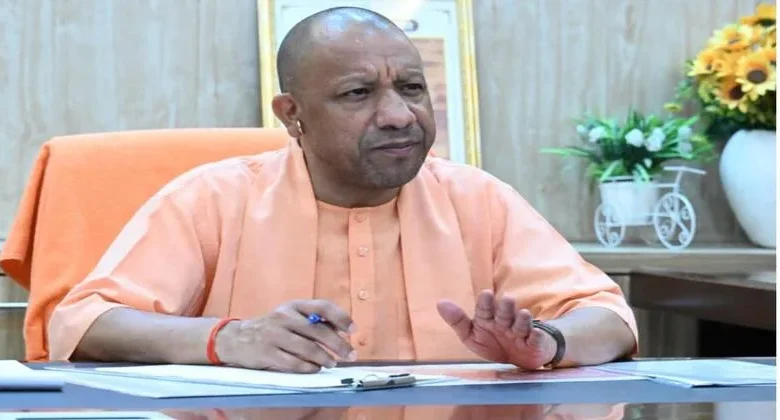
Uttar Pradesh Chief Minister Yogi Adityanath shared his thoughts in an open letter, ‘Yogi Ki Paati’, to the youth. Not as a routine administrative communication but as something rarer in Indian politics, a moral intervention.
A Nation That Leads the World: For the Wrong Reasons
India is the country with the most selfie-related deaths and injuries in the world, accounting for 190 deaths, nearly 47 per cent of all documented selfie-related fatalities globally. Research spanning a decade of data confirms that most selfie-related deaths involved young individuals, with nearly 89 per cent of victims under the age of 35 and India accounting for 46 per cent of all such global cases.
The phenomenon has only grown more dangerous in the age of Instagram Reels and YouTube Shorts. In 2024, a 27-year-old Instagram influencer with 2.6 lakh followers died after slipping into a 300-foot gorge in Maharashtra while filming a reel, a 19-year-old drowned at a power station waterway in Chennai while shooting Instagram content, and a 21-year-old from Banda district in Uttar Pradesh died when a flag post collapsed during a reel stunt. These are the few highlighted cases.
What Yogi’s Letter Actually Says
The Yogi Ki Paati does not moralise the youth directly; it names the problem precisely, the deadly race for likes, views and followers that pushes young men and women to perform stunts on railway tracks, hang from moving trains, perch on water tanks, and race motorbikes at lethal speeds. The CM writes directly to youth that going viral through dangerous imitation is not heroism but self-destruction and that every such death shatters not just a life but the dreams of an entire family.
What distinguishes this letter from standard public safety advisories is its cultural vocabulary. He invokes topics such as dayitva- duty and dharohar- heritage in his paati. He urges young Indians to make reels that are rooted in cultural pride, that generate positivity in society, not content that mimics a dangerous, alien attention economy. It is an appeal not to civic compliance but to civilisational self-respect.
This is the RSS-BJP worldview applied to the digital domain that the internet is not a value-neutral space, algorithms built in Silicon Valley are not culturally coincident with Indian youth, and Indian youth must engage with the digital world on their own terms, shaped by sanskriti, not by the hollow metrics of virality.
The Direct Address to Guardians: Reasserting Family as the First School
The letter has not only communicated with youth but also with AbhiBhavakas: parents and guardians. In an era where political communication typically bypasses the family and speaks directly to the individual consumer-citizen, Yogi’s choice to address guardians directly is ideologically significant.
The letter places responsibility on the family as the first institution of value transmission. It calls on parents to ensure their children use time productively, to steer them toward creative and constructive pursuits. Also, to act as the first line of awareness in the home before the state, the school or the platforms that own half-hearted content warnings.
The concept of vyavaharik shiksha, which means practical, values-based, embedded education to be started at home, is the older tradition of gurukul. What Yogi does has re-invoked this framework for a generation of parents who find themselves bewildered by a world where their children’s primary teachers are algorithms, influencers and viral trends. The letter tells them that your authority as guardians is not obsolete.
Digital Swadeshi: The Larger Civilisational Frame
The Uttar Pradesh government’s active youth welfare schemes in skill development, entrepreneurship and sports reflect a coherent philosophy: that the state must create enabling conditions and the citizen must exercise agency rooted in cultural values. Government schemes can open doors to skill teaching, but the sanskar can ensure the right doors are entered.
The CM message “Reel aur Real mein antar karna seekhiye” (learn to distinguish between reel and real) is deceptively simple. It is, in fact, a call to epistemological clarity in a world designed to blur lines. For a generation being raised by dopamine loops and engagement algorithms, the ability to distinguish authentic aspiration from manufactured desire is itself a form of Vivek: discernment that once defined the educated and culturally rooted Indian.
Research confirms that falling from heights remains the most common reason in real and selfie-related deaths globally at 50 per cent, followed by transportation accidents at 29%. The categories of reckless stunts make the Yogi letter target youth and parents. No-selfie zones and physical barriers have largely failed as interventions. What works to connect culturally rooted people with cultural and familial re-orientation. Yogi’s letter, in essence, is a policy instrument dressed in the language of a father speaking to his children.
In the Mahabharata, the sarathi is not merely a charioteer; he is a guide, holding the reins when the warrior’s vision is clouded by the chaos of battle. CM Yogi Adityanath Paati is an act of that quiet guidance. It does not thunder. It does not threaten. It reminds.
It reminds youth that they carry the weight of parivar, samaj, pradesh, and desh. It reminds parents that the home is the first classroom and the last line of defence. And it reminds all of us that in the age of the reel, the most revolutionary act may simply be to choose the real.