TVK’s Unicorn Moment: Vijay Redefines Tamil Nadu’s Political Playbook – News Today | First with the news

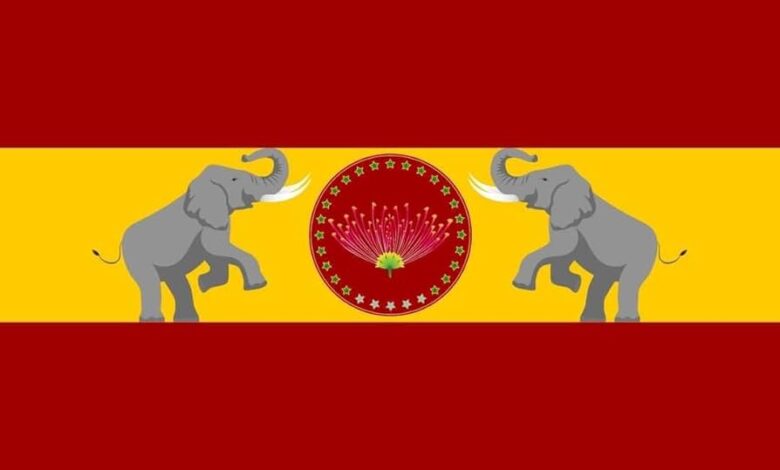
In a political landscape long defined by entrenched power structures and predictable contests, the emergence of the Tamilaga Vettri Kazhagam (TVK) as the single largest party marks a watershed moment in Tamil Nadu’s history. Led by actor-turned-politician C. Joseph Vijay, the party’s extraordinary debut has not only disrupted the state’s Dravidian duopoly but also introduced a new template for political mobilisation in India.
What makes TVK’s rise remarkable is its speed and scale. Formed barely two years ago, the party has secured 108 seats—just shy of the majority mark—placing it in a commanding position to form the government. In doing so, it has achieved what few political “startups” in India have managed: instant relevance, rapid expansion, and near-complete voter endorsement across regions.
The comparison to a “unicorn” is not misplaced. Much like rare startups that achieve billion-dollar valuations in record time, TVK has translated early buzz into tangible success at the ballot box. Historically, only a handful of parties have managed such a feat. The Aam Aadmi Party (AAP) formed the Delhi government soon after its debut in 2013, while the Telugu Desam Party, founded by N. T. Rama Rao, stormed to power in Andhra Pradesh in 1983. The Asom Gana Parishad (AGP) too rode a wave of public sentiment to form the government in Assam in 1985.
TVK now joins this exclusive league. For decades, Tamil Nadu has been a bipolar arena dominated by the Dravida Munnetra Kazhagam (DMK) and the All India Anna Dravida Munnetra Kazhagam (AIADMK). Elections were less about disruption and more about alternation. That rhythm has now been decisively broken. TVK’s ability to breach traditional strongholds—including regions once considered impregnable bastions of Dravidian parties—signals a deeper churn within the electorate.
The significance of this shift lies not merely in numbers but in voter intent. The mandate reflects a clear appetite for change, driven by rising expectations and a perception of governance gaps. Unlike previous attempts by film personalities—such as Kamal Haasan’s Makkal Needhi Maiam or the unrealised political foray of Rajinikanth—TVK has managed to convert popularity into a structured political movement with statewide resonance.
Yet, the road ahead is far from straightforward. Being the largest party is not the same as commanding a majority. With the halfway mark set at 118, TVK will need to secure support from independents or smaller parties to stake a stable claim. The transition from insurgent force to governing authority will test the party’s organisational depth, ideological clarity, and administrative readiness.
Beyond Tamil Nadu, TVK’s success carries national implications. It challenges the assumption that new political entrants must endure long gestation periods before gaining power. It also underscores that under the right conditions—charismatic leadership, public discontent, and strategic execution—even deeply rooted political systems can be upended.
For now, Vijay and his party stand at the cusp of history. Whether this “unicorn” can sustain its momentum in governance will determine if this electoral triumph becomes a lasting political realignment or a moment of disruption in an otherwise cyclical system.