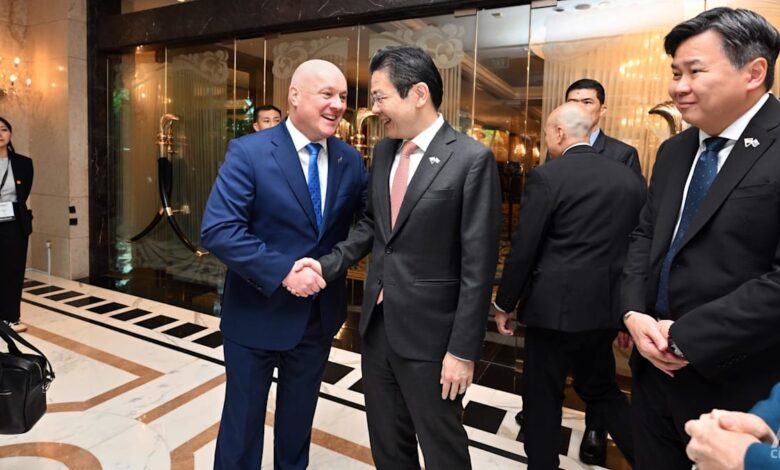
SINGAPORE: Singapore and New Zealand on Monday (May 4) signed the world’s first legally binding bilateral agreement to keep essential supplies – including food, fuel, healthcare products, and chemical and construction materials – flowing even during crises.
The Agreement on Trade in Essential Supplies was signed by Singapore’s Minister-in-charge of Energy, Science and Technology Tan See Leng and New Zealand’s Minister for Trade and Investment Todd McClay at the Singapore-New Zealand Annual Leaders’ Meeting in Singapore, witnessed by the prime ministers of both countries.
Both governments committed not to impose unnecessary export restrictions on the agreed essential goods, the Ministry of Trade and Industry (MTI) said.
The agreement will take effect after domestic procedures on both sides are completed, and will be incorporated into the existing bilateral free trade agreement between the two countries.
It also establishes a framework for both countries to facilitate the movement of goods, share information and consult each other before or during supply chain disruptions, providing businesses and consumers with greater confidence and stability, MTI said.
Speaking at a joint press conference, Singapore Prime Minister Lawrence Wong said the pact sends a clear signal that trusted partners will keep faith with each other even under strain.
“It means that even in times of crisis or shortages, we will keep essential goods flowing – food, fuel and other critical supplies. We will not shut each other out. And instead, we will work actively to keep trade moving,” said Mr Wong.
“This matters because in difficult times, every country will be tempted to look inward. But when that happens, supply chains break down and everyone ends up worse off.”
The agreement represents both countries’ commitment to doing things differently – keeping markets open, continuing to trade essential goods and standing by each other when it matters most, Mr Wong added.
New Zealand Prime Minister Christopher Luxon said at the press conference it was reassuring that both countries were taking practical steps to strengthen their resilience, by keeping essential links open while continuing to advance an agenda focused on growth and resilience.
About a third of New Zealand’s fuel is refined in Singapore, so what happens in Singapore has a direct bearing on New Zealand’s economic resilience and energy security, said Mr Luxon.
New Zealand is also a trusted supplier of food and other essential goods to Singapore, he added.
“This is a relationship which both countries can rely on one another. We have each other’s backs and that is why today’s signing of the agreement on trade and essential supplies is just so important,” he said.
“It takes a longstanding trust and it turns it into really practical action, a commitment to keep essential trade flowing in a crisis, and a commitment to give businesses, governments and the public confidence that trusted supply lines will remain open under huge pressure.”
Mr Wong said he and Mr Luxon discussed how to take Singapore and New Zealand’s cooperation further under the countries’ Comprehensive Strategic Partnership.
Partnerships like this become even more important in these uncertain times,” he said.
“We may be small countries, at least in terms of population. But we have agency. And when we work together with clarity, with purpose, and with trust, we can shape outcomes together, turn challenges into opportunities and bring benefits to our peoples.”