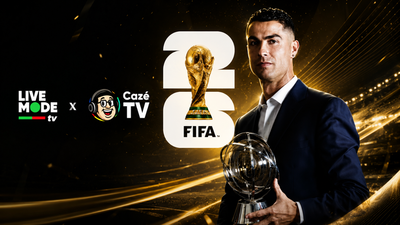
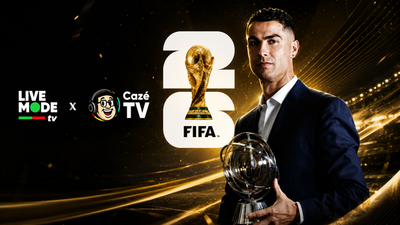
Cristiano Ronaldo’s recent investment in Brazilian sports media company LiveMode has brought renewed global attention to CazéTV, the YouTube platform that will broadcast all 104 matches of the 2026 FIFA World Cup free-to-air in Brazil. The arrangement, originally announced by FIFA in July 2025, represents one of the clearest examples yet of how digital-first sports platforms are beginning to challenge traditional television broadcasters in global football coverage. CazéTV, launched in 2022 by Brazilian YouTuber and streamer Casimiro Miguel in partnership with LiveMode, has rapidly evolved from a creator-led digital project into one of the largest sports distribution platforms anywhere in the world. The channel previously streamed selected matches from the 2022 FIFA World Cup in Qatar and later expanded into competitions including the FIFA Women’s World Cup, FIFA Club World Cup, Olympic Games coverage and major South American football tournaments.For the 2026 World Cup across the United States, Canada and Mexico, CazéTV will stream all 104 matches live in 4K on YouTube and digital platforms in Brazil, alongside daily shows, behind-the-scenes features, cultural programming and interactive coverage aimed at younger audiences.
Ronaldo investment strengthens global expansion plans
The platform’s growing influence received another significant boost after Ronaldo acquired what was described as a significant stake in LiveModeTV, the international broadcast arm of LiveMode. LiveModeTV launched in Portugal in December 2025 and secured rights to broadcast 34 matches from the 2026 World Cup free on YouTube, including all Portugal matches during the tournament. Although financial details surrounding Ronaldo’s investment were not disclosed publicly, the move attracted considerable attention because of the type of company the Portugal captain chose to back. Rather than investing in an established global broadcaster or subscription streaming giant, Ronaldo aligned himself with a sports media business built heavily around YouTube distribution, creator-driven programming and free access broadcasting models. In statements released following the investment, Ronaldo said sport “can change lives” and explained that the partnership aimed to “enrich the ecosystem, extending the reach and involvement of the main competitions through broadcasts on YouTube and content distributed on all social media platforms for everyone.” LiveModeTV also described the collaboration as an effort to bring “live football to YouTube in an innovative way, putting the fans at the centre of everything.”
CazéTV’s rapid rise changed sports broadcasting in Brazil
Since launching during the build-up to the 2022 FIFA World Cup, CazéTV has established itself as one of the biggest digital sports channels globally without relying on the traditional subscription television structure that has dominated sports broadcasting for decades. The platform currently has 26.9 million subscribers on YouTube and generated 3.7 billion views during 2025 alone. It also owns eleven of the sixteen biggest live broadcasts in YouTube history. Its largest audience arrived during Brazil’s quarter-final against Croatia at the 2022 World Cup, when CazéTV recorded 6.9 million concurrent devices watching simultaneously, which remains the biggest live audience ever measured on YouTube. Another major milestone followed during Flamengo’s match against Chelsea at the 2025 FIFA Club World Cup, when the platform reached 5.6 million concurrent viewers. CazéTV originally launched with the World Cup as its primary focus and streamed 39 matches during the 2022 tournament in Qatar, gaining approximately 5.5 million subscribers during the event itself. The channel’s success came during a period when several traditional Brazilian broadcasters reportedly showed reluctance toward FIFA’s asking price for World Cup rights packages, creating an opening for a digital-first platform to enter the market aggressively. SportsPro later described Brazil’s sports media landscape as particularly vulnerable to disruption because of the country’s enormous YouTube audience and changing viewing habits among younger football supporters.
FIFA embraces digital and creator-led broadcasting
FIFA has increasingly embraced CazéTV as part of a broader strategy focused on younger audiences and digital engagement. In announcing the 2026 agreement, FIFA said the partnership represented an important step in connecting the tournament with younger viewers through “digital, community-driven coverage.” The governing body also confirmed that the deal allows LiveMode opportunities to sublicense additional rights inside Brazil, subject to FIFA approval. CazéTV’s World Cup coverage will run alongside traditional broadcaster Grupo Globo, which holds non-exclusive rights to air every Brazil match, the final and half of the remaining tournament fixtures. The exact selection of Globo matches is expected to be finalised closer to the competition. Unlike conventional television broadcasts, CazéTV’s coverage model combines live matches with creator culture, social media interaction and influencer-led presentation styles. Casimiro Miguel will front much of the World Cup programming alongside former players, commentators, creators and digital personalities. The channel has also expanded distribution beyond YouTube in recent years. In Brazil, CazéTV content is additionally available through Disney+, Amazon Prime Video, Samsung TV Plus and Sky+, where the company launched its first linear television channel.
Aggressive sports rights expansion continues
The World Cup agreement forms part of a much larger expansion strategy undertaken by CazéTV and LiveMode over the past two years.The platform secured rights to the 2027 FIFA Women’s World Cup, which Brazil will host, with plans to stream all 64 matches free across digital platforms.In 2026 alone, the company added near-live and highlights rights for several South American football competitions, including Copa Libertadores and Copa Sudamericana tournaments.CazéTV also expanded aggressively into European football after announcing a six-season exclusive LaLiga rights agreement in Brazil during May 2026. The deal, which runs from the 2026-27 campaign through 2031-32, gives the platform rights to broadcast all 380 LaLiga matches live for free in Brazil across YouTube and partner streaming services, alongside official highlights, interviews and social media content distribution.The company has additionally acquired rights packages involving Italy’s Serie A, Germany’s Bundesliga, Olympic Games coverage through 2028 via the IOC, World Table Tennis commercial rights and international NFL games. The rapid growth has positioned the company as one of Latin America’s most aggressive sports rights buyers despite only launching four years ago. Industry observers increasingly view the platform as evidence that sports broadcasting economics are changing alongside audience behaviour, particularly among younger viewers who consume live sport through mobile devices, social media ecosystems and free streaming services rather than cable television bundles. The 2026 FIFA World Cup may become the clearest test yet of that shift. While broadcasters in markets such as the United States continue spending heavily on conventional television and subscription streaming rights packages, Brazil’s audience will be able to watch every match of football’s biggest tournament free through YouTube in one of the sport’s most passionate countries. Ronaldo’s involvement has only amplified attention around that model and around the possibility that digital-native sports broadcasting platforms could continue expanding far beyond Brazil over the coming years.