
The business models governing AAA video game publishing have fundamentally decoupled from traditional hardware cycles. Following Take-Two Interactive’s official Fiscal Year 2026 earnings presentation, media attention has locked onto the historic November 19 launch of Grand Theft Auto VI. However, buried deep within the publisher’s forward-looking pipeline disclosures is a secondary, highly calculated commercial hedge.
Take-Two president Karl Slatoff confirmed that the company has actively locked in six remakes, remasters, or platform expansions slated for release through Fiscal Year 2029.
By grouping these projects under the broad corporate umbrella of “new iterations of previously released titles,” Take-Two is deploying an aggressive nostalgia-monetization strategy. This pipeline is engineered to generate highly profitable, low-overhead revenue streams to cushion the massive development costs of its next-generation frontliners.
Deciphering the Pipeline: What is a “Platform Extension”?
Within investor relations documentation, the intentional insertion of the phrase “platform extensions” points directly to strategic porting and hardware optimization pipelines rather than expensive, ground-up graphical overhauls.
A platform extension serves multiple macroeconomic purposes for a modern publisher:
- Generational Hardware Targets: Preparing existing current-gen titles for native transitions to rumored mid-generation console refreshes or future hardware ecosystems.
- The PC Influx: Bridging the traditional platform gap by migrating console-locked masterpieces to PC architectures with modern enhancements like ultrawide display support and unlocked framerates.
- Low-Overhead Revenue Padding: Utilizing pre-existing source code and assets to stabilize Recurrent Consumer Spending metrics with minimal capital expenditure compared to building a new IP.

Speculative Blueprint: The Legacy Titles Most Likely to Return
Because Take-Two treats its pipeline snapshots as proprietary secrets, industry analysts and database scrapers have begun cross-referencing existing developer partnerships. Based on current production cycles, these are the four most logistically viable contenders to fill the six allocated slots:
1. The Max Payne 1 & 2 Remakes (The Definitive Anchor)
The easiest slots to identify are the ground-up remakes of Max Payne and Max Payne 2: The Fall of Max Payne. Officially funded by Rockstar Games, these titles are actively in production by Remedy Entertainment, utilizing their proprietary Northlight engine. This project represents a true “remake” allocation, moving away from simple resolution scaling toward a total structural redesign.
2. Red Dead Redemption 2: The Current-Gen Upgrade
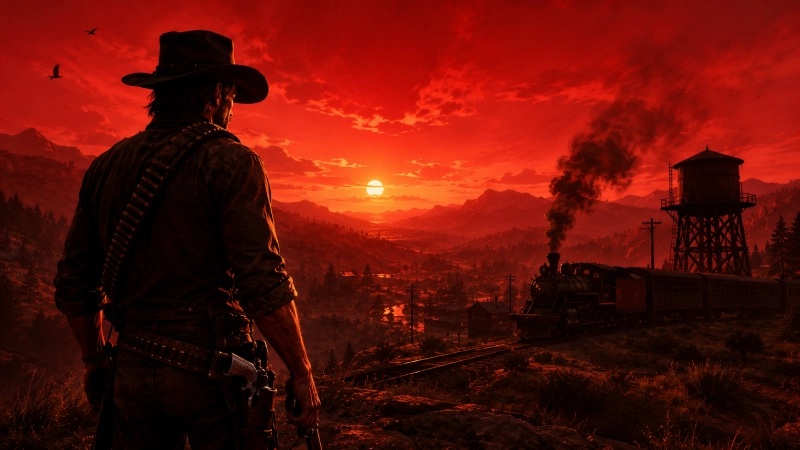
Despite generating over 65 million units sold, Rockstar’s 2018 western epic Red Dead Redemption 2 has never received a dedicated, native PlayStation 5 or Xbox Series X|S software update. Currently running via legacy backward compatibility at a locked 30 frames per second on modern machines, an optimized current-gen platform extension featuring Ray-Tracing and 60 FPS performance represents an effortless win for Take-Two’s quarterly net bookings.
3. Grand Theft Auto IV: The Anniversary Candidate
With Grand Theft Auto V continuing to sell millions of units every single quarter over a decade after its release, its legendary predecessor remains trapped on aging PC ports and legacy console architectures. A remastered version of Grand Theft Auto IV—cleaning up its complex Euphoria physics engine and asset rendering pipelines—could serve as a massive promotional vehicle to monetize classic Liberty City nostalgia right alongside the marketing campaign for GTA VI.

4. Max Payne 3: The Missing Modern Port
Often regarded as one of the finest linear third-person shooters ever engineered, Max Payne 3 remains completely missing from contemporary console digital storefronts. A straightforward remaster or modern console port would easily satisfy a vacancy in Take-Two’s “new iterations” matrix.
Historical Precedent: The Risk-Reward Margin of Re-Releases
This is far from the first time Take-Two has relied on nostalgia to stabilize its financial balance sheets. However, past executions have shown that the financial floor for these titles depends entirely on structural quality.
| Project Approach | Example Title | Algorithmic & Market Outcome |
| Ground-Up Remake | Mafia: Definitive Edition | High critical praise, sustained full-price sales, and brand rehabilitation. |
| Outsourced Remaster | GTA: The Trilogy – The Definitive Edition | Severe launch backlash, technical bugs, and temporary risk to core IP equity. |
The publisher struck gold with Hangar 13’s meticulous reconstruction of the original Mafia. Conversely, the outsourced development of the GTA Trilogy serves as a stark historical warning: while nostalgia guarantees initial pre-orders, substandard execution poses severe risks to core intellectual brands.

The Post-GTA VI Financial Bridge
The underlying motivation driving these six re-releases is clear-cut: risk mitigation. Building AAA video games has become an incredibly volatile endeavor, with standard development cycles routinely stretching past five to seven years.
By strategically dripping optimized versions of classic titles into the market between Fiscal Years 2027 and 2029, Take-Two creates consistent, reliable revenue streams. These remasters keep player ecosystems actively engaged within the publisher’s network, ensuring that the company’s balance sheets remain highly resilient even as the massive development cycles for their next-generation sequels continue to scale in cost.