The Enforcement Directorate (ED) investigation into The Timothy Initiative (TTI) has opened a larger question about the foreign church ecosystem that is behind the conversion of hundreds of thousands of Hindus to Christianity in India. It is a well-known fact that a lot of missionaries, either individually or linked to a church, visit India on tourist visas and indulge in evangelism, which is against visa regulations. However, the way these churches function as a nexus is a whole other story.
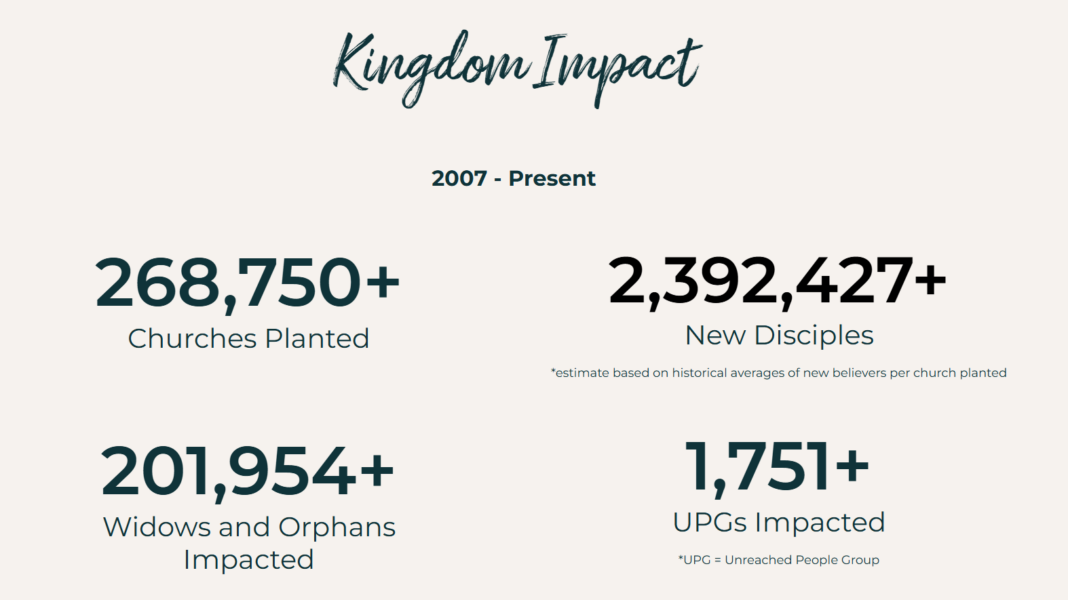
TTI has itself admitted that it has planted lakhs of churches in India since its launch in 2007 as “The India Project”. OpIndia’s investigation into its operations revealed at least twelve high-profile foreign churches working with TTI hand in hand to convert Hindus and other communities.
Publicly available church documents, mission pages, newsletters, campaign updates and partner material show that TTI’s India work has not been limited to one foreign organisation operating in isolation. A wider network of international churches, denominational bodies and mission partners have announced their association with TTI’s church plantation projects publicly over the years.
OpIndia has identified at least twelve non-Indian entities with explicit India-linked references to TTI, including churches from the United States-based churches and one Canadian denominational network. These links were not limited to generic mission language. In several cases, the churches spoke of fundraising campaigns, pastor training, field visits, house church planting, India-linked giving pipelines and multi-year targets.
The names include Kensington Church, Mission Grove Church, Northwest Baptist Church, Wooddale Church, Rise City Church, Mission Hills Church, First Presbyterian Church of Hanford, Springbrook Community Church and the Baptist General Conference of Canada. Other networks and church-linked entities such as Liberty Church Network, All Access International, Saltbox Church and Woodside Bible Church also appear in the wider TTI-linked ecosystem.
TTI’s India roots and the ‘Project India’ beginning
The headquarters of TTI is in Raleigh, North Carolina. It operates as a global church planting organisation. Its roots, however, appear deeply connected to India. The conceptual origins of the organisation reportedly go back to David Nelms’ early exploratory travels to India in 1992, which OpIndia has reported in a previous article in the series. Its field operations formally began in 2007 under the internal name “Project India”.
The stated objective from the beginning was aggressive and sweeping. TTI wanted to establish at least one church in every village across India. In 2009, the organisation rebranded itself as The Timothy Initiative with the purpose of expanding its operations globally. However, India continued to remain one of its most important strategic regions.
TTI’s operational model is built around a reproduction structure based on 2 Timothy 2:2. The structure uses “Pauls”, “Timothys” and “Tituses”. “Pauls” are indigenous trainers who establish local training centres and train cohorts of students. “Timothys” are disciple makers and church planters who work at the grassroots level. “Tituses” are new converts who are brought into peer-level spiritual formation and can later be pushed into the pipeline as future workers.
What attracted Western churches towards TTI was its low-cost and high-replication model. The organisation promoted the idea that an indigenous church planter could be trained and a self-replicating house church could be established for around $240 to $400. This allowed churches and donor networks abroad to sponsor large church planting exercises in India while presenting the campaign in simple financial terms to their congregations.
To put things in perspective, ED stated that TTI withdrew Rs 95 crore in six months using foreign debit cards. Even if we estimate that only Rs 40 crore out of it was used directly for church plantation, while the remaining money may have gone towards paying pastors, organising prayer meetings, field travel, local coordination and other operational expenses, and assume that the exchange rate was Rs 88 against 1 USD, it still comes to around $4.54 million, enough to plant over 11,300 churches at TTI’s stated $400 per church model. This is only an estimate for six months. Imagine what this group could have done since its inception in 2007. Not to forget, according to their own claim, they have planted over 2,68,000 churches in 50 countries, and India is their top priority.
Kensington Church and the northern India church planting trail
Kensington Church is a Michigan-based multi-site church. During our research, it appeared as one of the prominent foreign church entities linked to TTI’s India network. Its official TTI material referred to the “start of over 3,000 house churches in South Asia”. Other public church-linked material referred to over $2,00,000 being raised to plant churches in northern India.
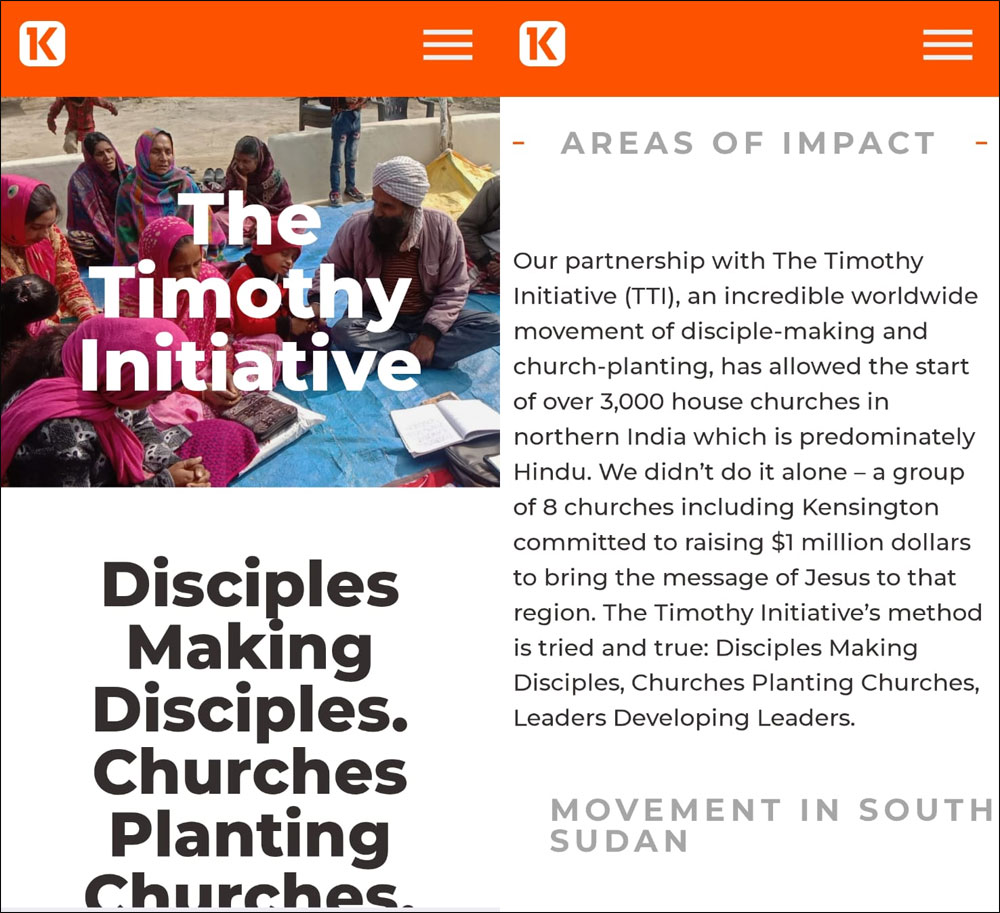
Kensington was also linked to a wider coalition of eight churches that reportedly committed to raising $1 million for church planting in the same region. Its public material included not only partnership language, but also practical India trip infrastructure, including an India packing list. This indicates that the relationship was not merely symbolic or limited to prayer support.
According to its India page, the church recruits men and women for an intensive 2-year training programme to make them church planters and pastors. They are the ones who convert Hindus across India for this church. They have established hospitals, run medical camps, orphanages and more in the country.
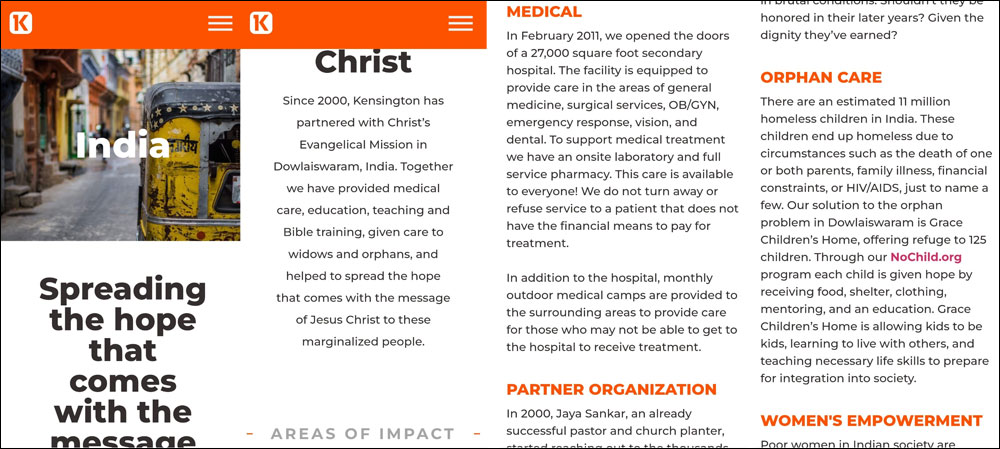
By its own admission, its “Grace Children’s Home” provides “refuge” to 125 children at any given time. Its target is not only adults but also 11 million homeless children in India. The church has its next trip to India planned in the second week of November. While this particular event does not mention TTI, it must be investigated by Indian agencies as the church claims it has been indulging in such activities in India since 2000.
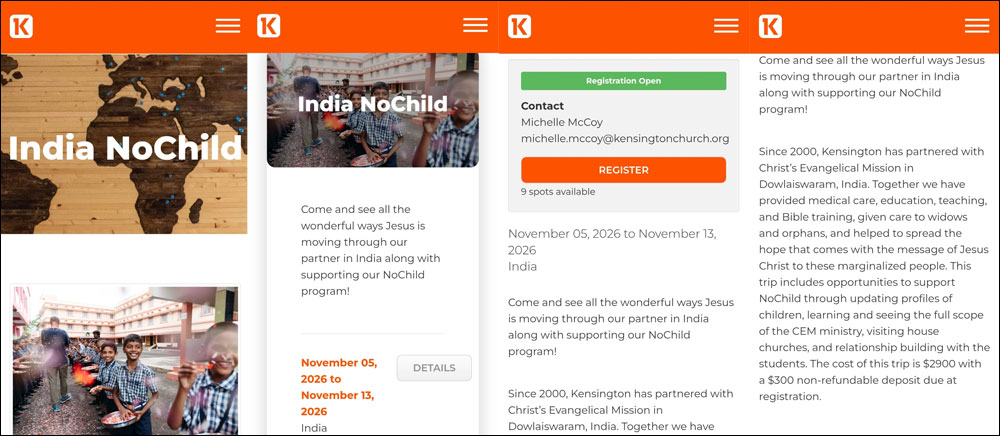
In effect, Kensington’s material shows a combination of three elements, fundraising, public mobilisation and practical field engagement. The northern India link is especially important because TTI’s India operations are now under regulatory scrutiny for alleged foreign fund movement outside the FCRA framework.
Mission Grove Church raised $1.6 million for church planting
Mission Grove Church in Cave Creek, Arizona, had one of the clearest public trails. A Mission Grove sermon page reportedly spoke of “planting 4,000 churches in northern India and Nepal in the next 4 years”. A later church transcription said that $1.6 million had been raised to plant over 4,000 churches in India and Bangladesh.
Pastor Jon Kragel was named in connection with the Mission Grove material. The public timeline suggests that the church first promoted a four-year India and Nepal target and later reported the campaign outcome in relation to India and Bangladesh. The $1.6 million was reportedly raised with the involvement of 81 individuals, churches and organisations in Arizona.
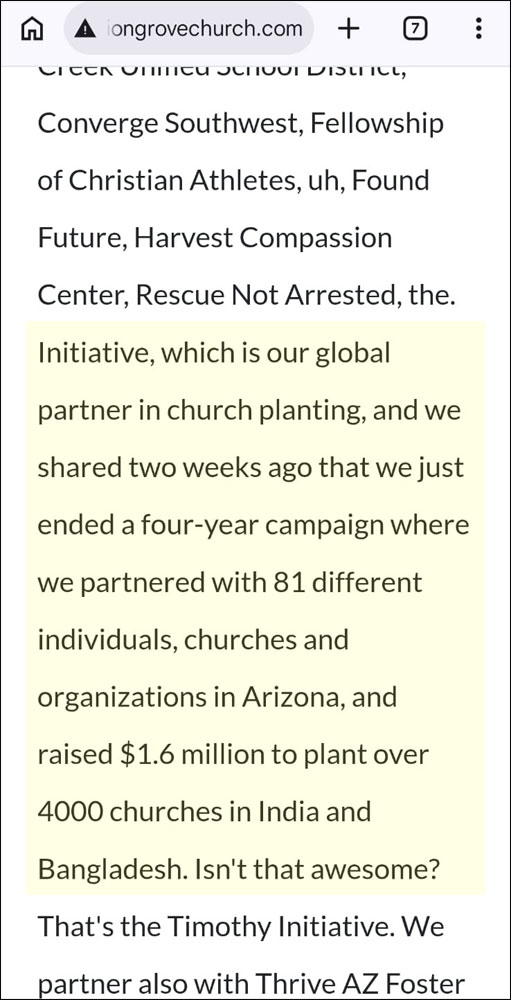
This makes Mission Grove a significant example of how TTI’s India linked operations were presented abroad as large, target based church planting campaigns.
Wooddale Church and the India, Nepal and Bangladesh training trip
Wooddale Church in Eden Prairie, Minnesota, also appears in the TTI linked trail. Its bulletin reportedly said that Pastor Dale and Richard Payne had returned from a “Timothy Initiative training trip to India, Nepal and Bangladesh”.
Wooddale’s annual report material from 2015 read, “In 2015, over 1,000 new leaders were developed and trained to plant over 600 new churches in Asia in partnership with The Timothy Initiative. #churchplanting”. In 2023, it claimed that they planted over 2,000 churches through TTI partnership.
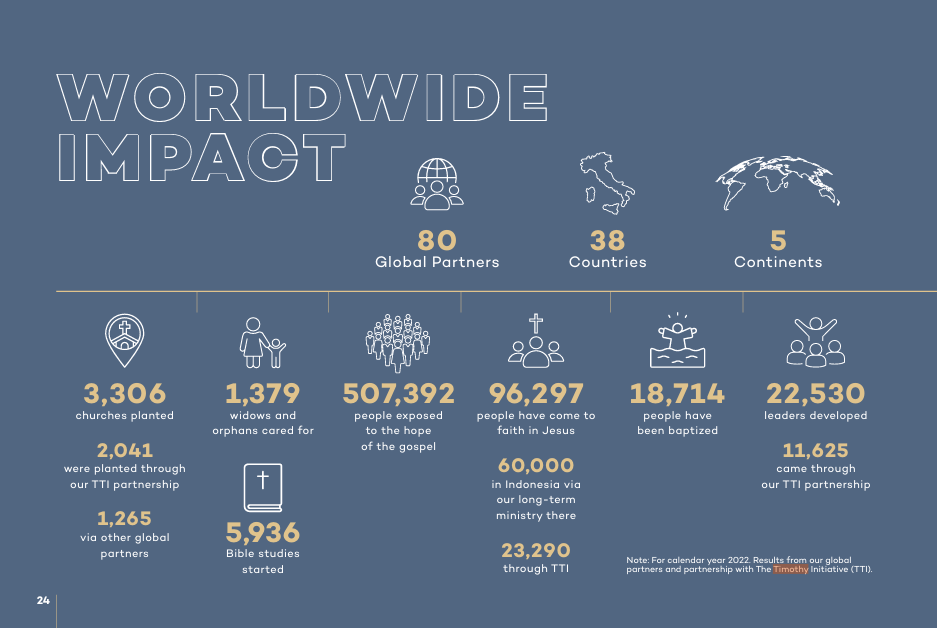
It is important to note that some of Wooddale’s numbers were Asia wide and not India specific. However, the India, Nepal and Bangladesh training trip establishes that the church’s TTI relationship had a direct South Asia component.
Rise City Church and visits to northern India
Rise City Church in Gresham, Oregon, described its TTI partnership in direct India terms. In 2021, it said it had partnered with TTI “to help train pastors and plant churches in India”. In 2022, it described TTI as “aggressively planting Churches in India”.
Its 2022-year end update also said that a representative had travelled to northern India to visit some of the churches the church had helped plant through The Timothy Initiative. This is important because it shows that the link was not restricted to remote fundraising. Rise City publicly described field level connection with churches planted in northern India.
Rise City’s Kingdom Builders fund had reportedly raised nearly $10,000 in the early phase, while a later planning page said its Kingdom Builders budget had grown to about $100,000. Its update also credited Kingdom Builders with 56 church plants across the world over two years, though that figure was global and not India specific.
Mission Hills Church and the 600 Indian pastors conference
Mission Hills Church in Littleton, Colorado, listed The Timothy Initiative as a global outreach partner. Its update said that in 2025, it would have helped fund 1,000 new churches. The same update also referred to helping a partner in India conduct a pastor conference for over 600 Indian pastors.

The 1,000 churches figure appears to be global, not India specific. However, the 600 Indian pastors conference is a clear India linked element. This shows another layer of TTI’s India ecosystem, not only church planting, but also pastoral training and leadership mobilisation.
BGC Canada and the $400 per church model
The Baptist General Conference of Canada, BGC Canada, provides another clear organisational link. Its official material said that it was partnering with The Timothy Initiative and stated that the cost to plant one church was approximately $400 USD.
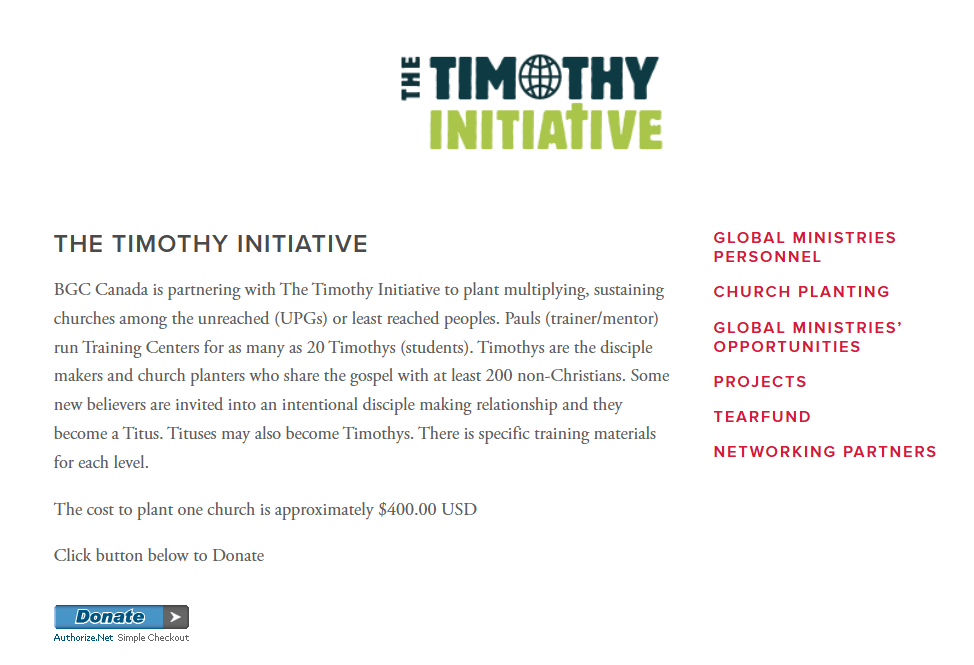
An August 2022 newsletter from India reportedly said, “BGC is partnering with TTI to plant house churches,” and added that donations to TTI could be given through the BGC office in Edmonton. The newsletter was linked to Kevin Schular, Executive Director of BGC Canada.
This reveals how foreign denominational structures could act as donor channels for TTI’s church planting projects. The $400 per church pitch also shows how the campaign was simplified for international Christian donors, reducing a complex India operation into an easily marketable unit cost.
Northwest Baptist, Hanford and Springbrook
Northwest Baptist Church in Bellingham, Washington, listed The Timothy Initiative through Converge and described it as focusing on planting a church in every village of India and Nepal. While the publicly available trail here is thinner than Kensington or Mission Grove, TTI still appeared as part of the church’s active international missions roster.
First Presbyterian Church of Hanford, California, appeared through a church newsletter. The newsletter said “Dan S.” was training leaders with whom he had established strong connections in India in how to implement TTI’s principles for church planting. The evidence points to a training conduit rather than a large visible fundraising campaign.
Springbrook Community Church was linked to a 2014 India vision trip. Pastor Rich’s India page reportedly said that the trip would be in partnership with The Timothy Initiative and Converge Worldwide. The trip was described as involving teaching, encouraging and learning from leaders and church planters in southern and northern India.
Liberty Church Network, All Access International and other linked entities
The wider TTI ecosystem also included other church linked entities and networks. Liberty Church Network reportedly aligned with TTI in 2011 and funded 780 house churches across India during the 2011 to 2012 cycle. It was also linked to 200 churches in Northeast India during the 2012 to 2013 operational year.
All Access International reportedly managed the “ACHIEVE South & Southeast Asia” portfolio for 2026 to 2027, with an allocation budget of $4,578,240. The plan was to train 1,050 “Pauls” and 19,000 “Timothys” to plant an estimated 11,000 house churches in unreached Indian and regional villages.
Saltbox Church reportedly linked TTI’s global church planting platform alongside Mission India within its international mission’s portfolio. Woodside Bible Church maintained a separate India footprint and deployed short term teams for theological training of 180 pastors and church planters from 28 Indian states.
Taken together, these entities show that TTI’s India related work was not a loose or one off arrangement. It was connected to a broad ecosystem of churches, networks, donors, trainers and mission bodies.
The caste linked field strategy
The foreign church network becomes more concerning when read with TTI’s field strategy. Internal training material and field manuals reportedly showed a methodical approach designed to penetrate Hindu majority rural communities while reducing local resistance.
One of the most controversial components was the caste linked intermediary strategy. Instead of general public preaching, TTI’s material reportedly instructed church planters to identify and convert key leaders from individual castes. The logic was simple. Since caste structures influence local social life, converting a leader from a particular caste could open the door to converting others from the same group.
Once such an influential figure was converted, he could be used as an intermediary to influence the wider community from within. This meant that existing social structures were not merely being observed but used as a pathway for religious conversion.
Targeting Hindu ideas such as karma and reincarnation
TTI’s curriculum also reportedly targeted core Hindu ideas such as karma and reincarnation. Its tenth manual outlined ways to reframe Hindu philosophical concepts before rural audiences.
Karma was reportedly presented as an inescapable cycle without forgiveness, while Christianity was positioned as offering immediate redemption and divine grace through Christ. Similarly, traditional understandings of sin were reframed as conscious moral disobedience that required external divine correction.
This was not merely theological discussion. It was part of a structured conversion oriented curriculum designed for field workers entering non-Christian communities.
Low profile tactics to avoid resistance
TTI’s field material also reportedly advised workers to avoid high visibility evangelism in areas where resistance was expected. Carrying physical Bibles, distributing tracts or screening religious films could attract suspicion, hostility or surveillance.
Instead, workers were instructed to memorise scripture and rely on oral communication, informal storytelling and gradual relationship building. The idea was to embed themselves into the daily social life of villages before slowly introducing Christian religious ideas in private residential settings.
This shows that the operational model was not only about funding and training. It also involved tactical adaptation to local resistance.
ED probe into alleged FCRA bypass
The Enforcement Directorate’s investigation has brought TTI’s India operations into the national spotlight. In April 2026, ED conducted raids at multiple locations linked to TTI operators. The agency found that TTI was not registered under the Foreign Contribution Regulation Act, FCRA, making it legally ineligible to receive or distribute foreign donations in India.
Investigators reportedly found that the alleged modus operandi involved international couriers and foreign nationals entering India through transit hubs. One key interception took place at Bengaluru International Airport, where immigration authorities intercepted an associate courier named “Micah Mark” or “Jose Bell”, who was allegedly operating under a Look Out Circular.
A search reportedly led to the recovery of 24 foreign bank debit cards issued by US based Truist Bank and linked to overseas accounts. Forensic tracking allegedly found that between November 2025 and April 2026, around Rs 95 crore was routed into India through structured high value ATM cash withdrawals across multiple states.
The money was reportedly tracked through a foreign controlled online billing and accounting database that recorded field utilisation and stipend distribution to local handlers.
Rs 6.5 crore allegedly tracked to sensitive regions
A major concern for investigators was the destination of part of the cash. Around Rs 6.5 crore was reportedly tracked to sensitive, tribal dominated and left-wing extremism affected regions, including Bastar and Dhamtari in Chhattisgarh and parts of Jharkhand.
This is significant because these regions are already vulnerable due to security challenges, tribal sensitivities and foreign funded missionary activity concerns. The alleged creation of a cash heavy parallel system outside formal FCRA channels in such regions raises serious questions about oversight and accountability.
Why the foreign church network matters
The international church links matter because they show that TTI’s India operations were not merely local or spontaneous. Foreign churches publicly raised funds, promoted church planting targets, sent teams or representatives, supported pastor training, and presented India as a strategic mission field.
Kensington’s northern India campaign, Mission Grove’s $1.6 million fundraising, BGC Canada’s $400 per church model, Rise City’s northern India visit, Mission Hills’ 600 Indian pastors conference and Wooddale’s South Asia training trip all point towards a structured ecosystem.
The deeper question is not whether TTI had foreign supporters. The public material shows that it did. The real question is how a foreign backed church planting ecosystem, supported by churches, networks and denominational channels abroad, allegedly created a cash-based India network that investigators now say operated outside FCRA scrutiny.
The evidence shows that TTI’s India footprint was not shallow. It had money, training systems, foreign church partners, denominational routes, field visits, public campaigns and village level ambitions. In other words, the network around TTI appears to have spread far beyond one organisation and into a wider international church infrastructure focused on India.