For years, India’s online travel industry was shaped by a simple formula: discounts drove discovery. Platforms competed aggressively through cashback offers, low fares, festive sales, and convenience-led positioning in an attempt to acquire internet-first travellers at scale.
EaseMyTrip emerged within that environment and built much of its early recall around affordability and zero convenience fees. But as travel discovery shifts from search engines to social platforms and increasingly to AI assistants, the company has been attempting to reposition itself from a transaction-led booking platform into a more experience-led travel ecosystem built around repeat engagement, personalisation and trust.
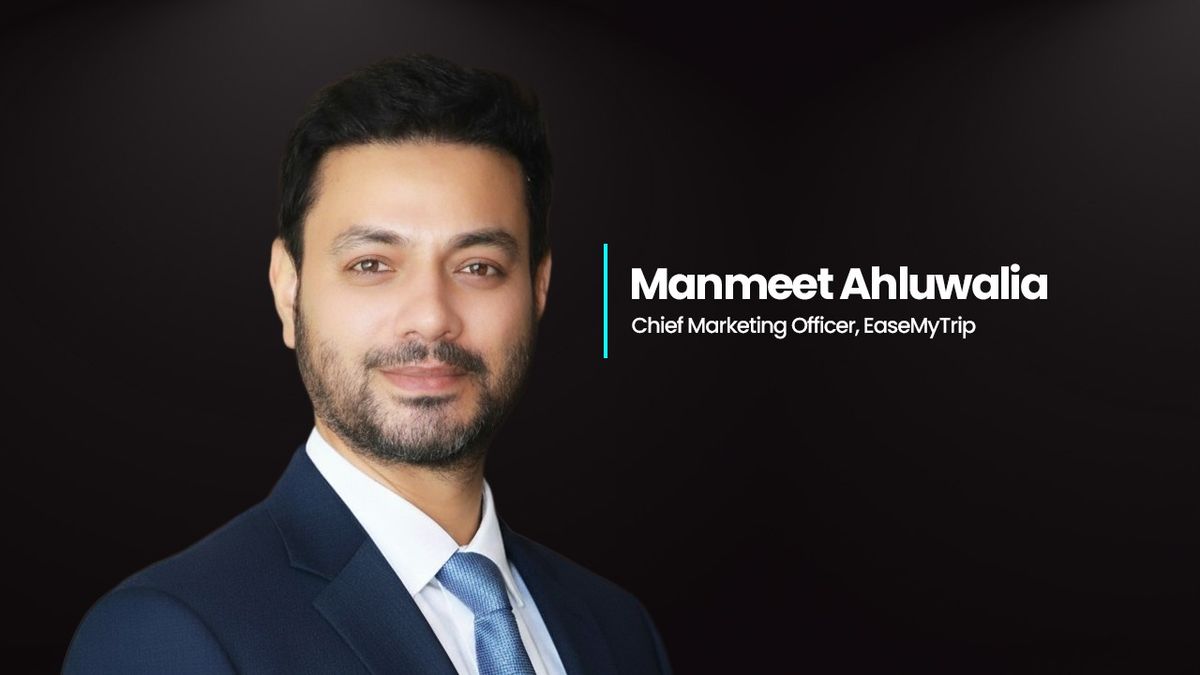
“Our marketing approach today is centered around being accessible, trustworthy, and value-driven while also evolving into a more experience-led travel brand,” says Manmeet Ahluwalia, Chief Marketing Officer, EaseMyTrip.
From price wars to trust-building
EaseMyTrip’s early communication reflected the realities of India’s online travel market at the time. One of the platform’s older campaigns positioned EaseMyTrip as the place to find the “cheapest” tickets, reflecting how aggressively value-led the category was during its growth years. At a time when pricing often determined user acquisition, the platform’s communication leaned heavily into affordability and savings. That strategy worked in a market where Indian travellers were highly price-sensitive and online booking behaviour was still evolving. EaseMyTrip’s “No Convenience Fee” proposition helped the company carve out a distinct identity within a crowded OTA landscape.
While the proposition was still rooted in value, the messaging had begun shifting from pure discounting toward transparency and trust-building.
The company’s recent ‘Great Indian Summer Travel Sale’ campaign is positioned less around pure discounting and more around simplifying travel planning during a high-intent booking season dominated by family vacations and leisure travel.
“Beyond pricing, our broader 2026 strategy is focused on building stronger repeat engagement through personalisation, AI-led discovery, curated experiences, and long-term customer relationships,” Ahluwalia says.
The shift also reflects how travel marketing itself is evolving. Discounts may help bring users to a platform, but retaining them increasingly depends on trust, convenience and how seamless the overall experience feels.
EaseMyTrip’s recent communication leans more heavily into reliability, flexibility and travel confidence instead of purely transactional pricing narratives. The tonality has gradually moved from utility-first communication toward more experience-led storytelling.
The next chapter in marketing: repeat users
For travel platforms today, the challenge is no longer just attracting users through discounts, but finding ways to make them return. EaseMyTrip’s current strategy is heavily focused on repeat engagement through AI-led discovery, curated experiences, app engagement and personalisation.
This becomes particularly important at a time when customer acquisition costs are rising and travel discovery is becoming fragmented across creators, social platforms, AI assistants and community-driven recommendations.
“The travel ecosystem is evolving from search-led discovery to conversational and intent-driven discovery, and brands need to adapt to where consumers are spending time,” Ahluwalia says.
That shift is visible in EaseMyTrip’s recent integration with ChatGPT, which allows users to discover and plan travel through conversational prompts instead of traditional search behaviour. The integration also raises a larger question for travel brands: if AI interfaces become the primary discovery layer, do booking platforms risk becoming invisible backend infrastructure while AI systems own the consumer relationship? EaseMyTrip does not see the transition as a threat.
“Our focus is on continuing to deliver value through trust, pricing transparency, service reliability, and a seamless booking experience, regardless of the discovery interface. Strong brands will continue to stand out because customer loyalty in travel is built over repeated experiences, not just a single interaction,” Ahluwalia says.
The company’s response to that uncertainty is to deepen its own ecosystem through loyalty, repeat user experiences, app engagement and personalised discovery journeys rather than relying only on search-led traffic.
Different India, different marketing
EaseMyTrip’s strategy also reflects the growing divergence between metro consumers and travellers emerging from Tier II and Tier III markets, which are increasingly driving travel growth.
The company says its communication in smaller markets is more trust-led, vernacular-friendly and value-conscious compared to metro-focused messaging that leans more heavily on experiences and personalisation.
“Consumers in these markets are increasingly aspirational and digitally connected, but they also seek reassurance, ease of use, and simplified travel planning. Our communication therefore focuses on affordability, convenience, regional relevance, and multilingual engagement,” Ahluwalia says.
He adds that while metro audiences increasingly respond to premium experiences and curated travel, emerging markets still place equal importance on accessibility, trust and ease-of-use.
The distinction highlights how travel marketing in India increasingly requires multiple narratives running simultaneously rather than a single national communication strategy.
Marketing travel to Gen Z
Another major influence on EaseMyTrip’s evolving playbook is Gen Z consumer behaviour. For younger audiences, travel is increasingly tied to identity, self-expression and social experiences rather than simply relaxation. That shift is changing how travel platforms approach content, media planning and campaign formats.
EaseMyTrip says it is increasingly leaning into creator-led storytelling, short-format content, experiential travel themes and culturally relevant moments aimed at younger audiences.
“We are increasingly focusing on short-format content, creator-led storytelling, experiential travel themes, spontaneous getaways, and culturally relevant moments that resonate with younger audiences,” Ahluwalia says.
The company is also seeing stronger demand around event-led tourism, where consumers plan trips around concerts, sporting events, festivals and large cultural moments.
“What we are seeing is that travellers are evaluating events like the World Cup not as a single-event trip, but as a complete travel investment, where decisions are based on end-to-end cost visibility rather than just match access,” he says.
Event tourism is increasingly becoming part of how younger consumers experience travel itself, where concerts, matches and cultural moments are shaping destination choices as much as the destination itself.
Digital-first, but not digital-only
Like many internet-first brands, EaseMyTrip now allocates a significant portion of its marketing investments toward digital platforms because of sharper targeting and measurable performance.
However, the company says television and print continue to play an important role during large-scale campaigns and mass visibility moments.
“Digital gives us sharper targeting, measurable performance, and the ability to personalise communication at scale. That said, traditional platforms like television and print still play an important role during festive periods and brand-building moments,” Ahluwalia says.
According to Ahluwalia, the focus is not digital versus traditional, but rather using each medium strategically based on audience behaviour and campaign objectives.
Geopolitics, sustainability and cautious travellers
Alongside changing consumer behaviour, travel platforms are also navigating external disruptions ranging from geopolitical tensions to growing sustainability concerns.
According to Ahluwalia, global uncertainty has made international travellers more cautious, particularly around safety perception, accessibility and flexibility. At the same time, travellers are increasingly showing interest in eco-friendly stays, slow travel, nature-first itineraries and lower-impact travel experiences.
“Sustainable tourism is no longer a niche choice. It is becoming an increasingly important behaviour among modern Indian travellers,” Ahluwalia says.
EaseMyTrip says it is focusing on sustainable hospitality initiatives, greener operational practices and EV-first mobility solutions within broader travel ecosystems.
What the next travel platform may look like
Travel planning is increasingly moving across multiple touchpoints simultaneously, including social media, creator ecosystems, AI assistants and immersive digital experiences. For online travel companies, the challenge is no longer limited to offering cheaper fares or seasonal discounts. The larger task now is staying relevant and discoverable across an internet that is becoming increasingly personalised and AI-driven.
“For us, the priority in the short term is to strengthen discoverability, personalisation, and engagement across these evolving consumer touchpoints,” Ahluwalia says.
“Long term, the goal is to build a more intelligent, connected, and experience-led travel ecosystem that remains relevant across every stage of the traveller journey,” concludes Ahluwalia.