Numbers are persuasive. But the right number, at the right moment, can do something far more impactful. It becomes a language an entire industry starts speaking.
That’s precisely what happened when Soya Supreme launched its research-backed campaign in December 2025. Based on a blind testing CHT study conducted by Pulse Consultant across major metro cities of Pakistan, the brand put a single statistic at the heart of its messaging: 9 out of 10 Pakistani women choose Soya Supreme. No elaborate narrative or big idea. Just a number that was clean, credible, and impossible to argue with.
It was a confident move and it worked on multiple levels. For consumers, the figure offered reassurance rooted in real behavior. For the brand, it established authority without aggression. More importantly, it introduced a format that quickly entered the vocabulary of marketing teams across the country.
Pakistan’s FMCG sector has always been competitive, usually revolving around family values, heritage, taste, and price. What Soya Supreme introduced was a proof point that turned the consumer herself into the endorsement. The “9/10” construct isn’t new in advertising, but its clarity and timing made it highly effective. It told undecided buyers that the choice had already been validated by people just like them.
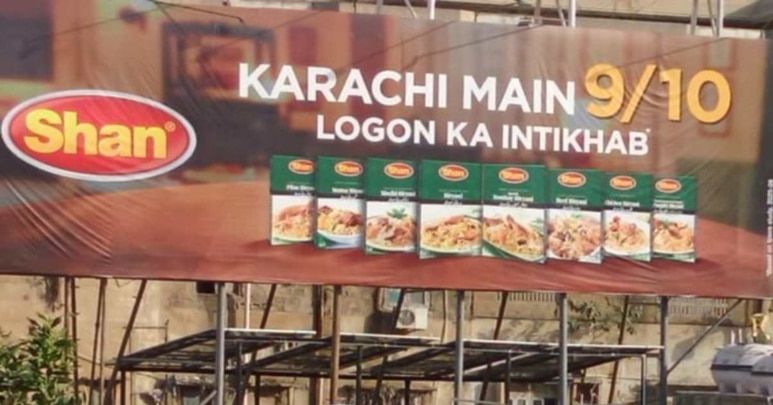
Within months, the language spread across categories. Shan Foods declared itself “Karachi mein 9/10 logon ka intikhab.” Falak Foods responded with “1/10 bano… kuch naya karo,” reframing the majority as conformity rather than consensus.


Then Mezan entered the conversation with: “Masala koi bhi ho… har cheez Mezan mein 10/10 lagti hai.” Karachi’s billboards became a live example of how one communication idea can ripple outward: first adopted, then challenged, then creatively reinterpreted. Every brand entering the conversation benefited from awareness the original campaign had already created.

This kind of brand sparring is more common in Western markets, but in Pakistan it felt relatively fresh. Consumers didn’t just watch the exchange, they shared it, discussed it, and picked sides. Billboards stopped feeling like static advertising and started becoming part of popular culture.
For Soya Supreme, the deeper win may be this: the brand that started the conversation is the one that defined its terms. Regardless of who responded loudest or most creatively, the “9 out of 10” framework belongs to them.
And it all started with one number.