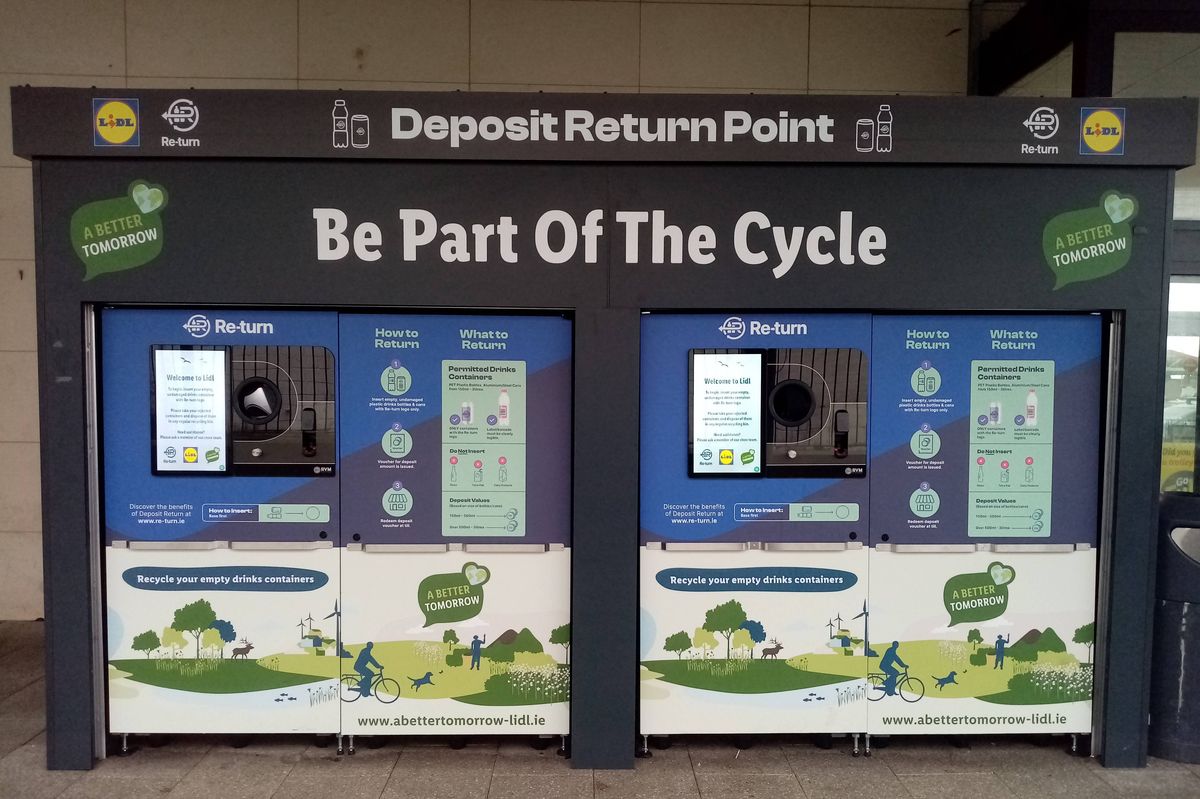
Dirty cans and bottles that are sitting in a machine can draw flies and rodents to reverse vending points, which are often at the entrance to or inside supermarkets

(Image: Derick Hudson via Getty Images)
Medical experts have raised concerns about the potential health impacts of the Deposit Return Scheme (DRS), with bacterial growth from residual liquid on bottles and cans as the main concern.
An emergency medicine consultant, a GP, and a public health specialist said the scheme needs improvement. RTÉ reports that the health experts say remnants of alcoholic and sugary drinks can lead to bacterial growth, as well as attracting pests.
Dirty cans and bottles sitting in a machine can draw flies and rodents to reverse vending points, which are often at the entrance to or inside supermarkets.
In the latest edition of the Irish Medical Journal, Dr Mick Molloy, a consultant at Wexford General Hospital, public health specialist Nandakumar Ravichandran, and GP Dr Walter Cullen, both from the UCD School of Medicine, raised concerns for anyone who has to maintain or empty deposit machines, including retail staff.
They say that no infection control protocol has been published publicly. According to RTÉ, officials at Re-turn (the operating company of the DRS) and the HSE are being urged to examine health and safety issues, as well as previous concerns raised by the Irish Waste Management Association. The health experts suggested a campaign to encourage consumers to rinse containers before returning them.
A spokesperson for Re-turn, which operates the scheme, said it is not aware of “any recorded cases of illness arising from the operation of the Deposit Return Scheme” and said it will continue to run campaigns to encourage the responsible use of reverse vending machines.
“The scheme operates through structured collection infrastructure, and participating retailers and return point operators are required to manage return points in line with established health, safety and waste-handling requirements,” they said, and added that it issues guidance to retailers with advice on how to manage pests and smells from the machines.
They said: “Re-turn also issues regular guidance to retailers and operators, including seasonal advice during warmer periods to help manage issues such as residue, odours and insects. Retailers receive handling fees to support the operation and upkeep of return points, and Re-turn works closely with them to support best practice across the network. Additionally, Re-turn continues to run consumer education campaigns, encouraging people to Re-turn containers responsibly.”
They added: “We take all matters relating to public health, safety and environmental performance seriously and remain open to engaging constructively with medical, public health and environmental experts, as well as relevant agencies, on any evidence-based guidance that could further strengthen public confidence in the scheme.”
The DRS was introduced in Ireland in 2024, with a 15c or 25c deposit on the sale of cans and bottles, which consumers can claim back at designated reverse vending machines at supermarkets. Re-turn has acknowledged that the scheme has had a significant environmental impact, with an uptick in the recycling of plastic and aluminium containers.
Over 2.4 billion containers have been processed since the scheme began, with over 90% of bottles and cans in Ireland now being recycled. Meanwhile, there has been a significant reduction in bottle and can litter, with Coastwatch reporting the lowest levels on Irish beaches in 25 years and IBAL recording a substantial reduction in can and bottle litter in communities.
A new plan to upgrade the DRS this year should see customers able to transfer their claimed deposits directly into their bank account, rather than having to get a receipt slip. Currently, shoppers can either use their deposit receipts to discount their shopping or exchange them for cash in-store, reports Cork Beo.
It may only seem like a few cans or bottles in the bin, but since the scheme began, Irish households have left more than €100 million unclaimed. In 2024, customers failed to collect €66.7m.
Re-turn has said it plans to build a multimillion-euro recycling facility using some of the funds from unreturned deposits. Currently, recycled material is sent abroad to facilities where it is used to produce new drink containers. Re-turn is planning a new facility to process bottles and cans here in Ireland.
All unclaimed deposits go towards the upkeep of the Deposit Return Scheme – including grants for retailers, new recycling points, and funding major capital projects. These expenses are also covered by producer fees and the sale of recycled material.
Want to see more of the stories you love from RSVP ? To add RSVP as a preferred source of news on Google, simply click here