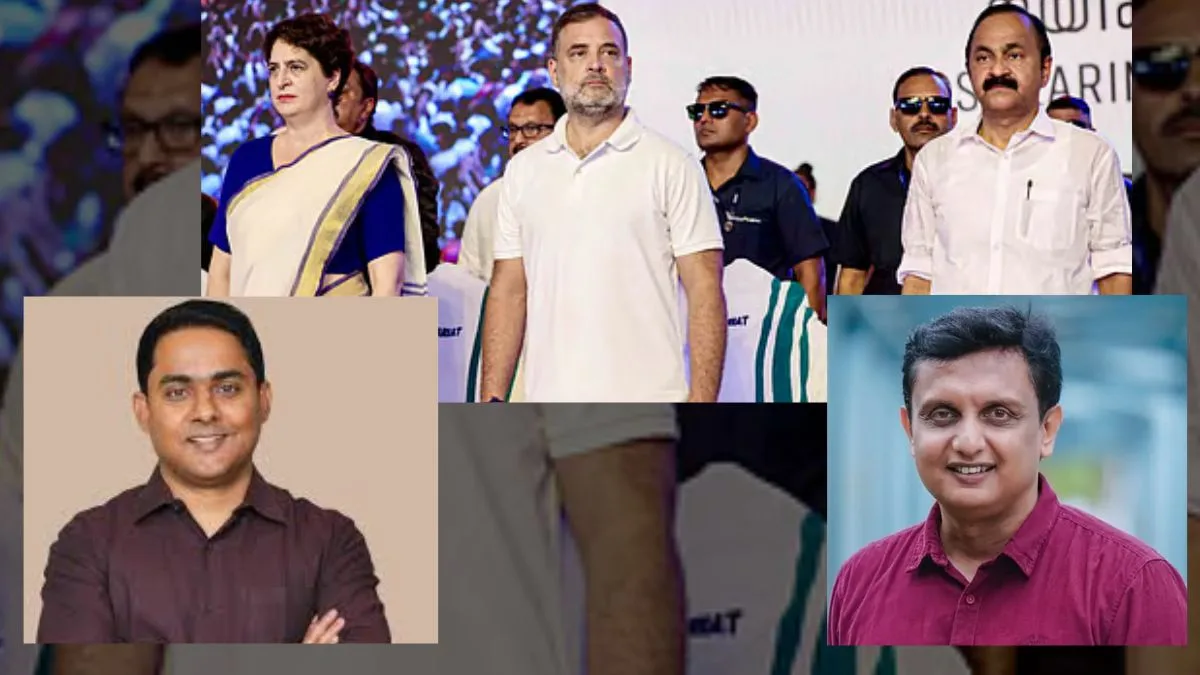
Former CPM minister and Muhammad Riyas has stirred a fresh political debate in Kerala by expressing concern over the rendition of the full version of Vande Mataram during the swearing-in ceremony of the new UDF government led by V. D. Satheesan.
In a Facebook post, Riyas said that only the first two stanzas of Vande Mataram have traditionally received official acceptance and public rendition, while the remaining portions have historically triggered controversy and anxiety among sections of society. Referring to debates both before and after Independence, he noted that attempts to make the song compulsory had often faced opposition from organisations and civil liberties activists, who argued that such moves could adversely affect constitutional freedoms and the secular fabric of the country.
Riyaz further pointed out that recent observations by the Supreme Court clarified that the Union government’s directions regarding the singing of Vande Mataram are merely “advisory” in nature and that there is no penalty for non-compliance. He said the UDF had shown urgency in correcting the Lok Bhavan protocol instructions related to the swearing-in ceremony, but failed to display the same sensitivity regarding the rendition of the complete song. Calling upon the new government to uphold secularism and pluralism, he urged it to remain cautious in matters carrying religious and political sensitivities.
The remarks triggered a sharp response from Anoop Antony Joseph, BJP state general secretary, who accused Riyas of questioning a patriotic symbol deeply linked to India’s freedom struggle. Anoop said the former minister’s comments sounded similar to narratives advanced by forces that work against national interests. Describing the statement as “unfortunate” and “deplorable,” he alleged that Riyas was attempting to view Vande Mataram through the prism of religious sentiment rather than national heritage.
According to Anoop, Vande Mataram remains inseparable from the country’s nationalist history and patriotic spirit. Raising doubts over such a song, he argued, could create divisions and fissiparous tendencies in society. He maintained that the song represents a significant cultural and historical legacy of the freedom movement, adding that no one could deny its place in India’s national consciousness.
The BJP leader further alleged that Riya’s comments were aimed at appeasing religious fundamentalist groups and consolidating a particular vote bank. He claimed the statement reflected what he described as the CPM’s tendency to “surrender” before extremist elements that allegedly show little regard for nationalist sentiments. Such remarks against patriotic symbols, he said, form part of a dangerous political strategy that could undermine social harmony and unity.
Anoop Antony also asserted that official events such as swearing-in ceremonies should serve as occasions to reinforce national pride and patriotic values. He accused Left parties of adopting a “double standard” by invoking constitutional secularism to create what he termed “unnecessary anxieties” over national symbols. Referring to the Union Home Ministry’s directive issued as part of the sesquicentennial celebrations of Vande Mataram, he claimed the Centre had encouraged the singing of the complete song and warned against insulting it. He questioned whether Riyas was genuinely unaware of these directives or merely pretending ignorance.
The BJP leader added that Kerala should not lag behind other states in respecting national songs and symbols. He urged the CPM to stop, in his words, portraying nationalism negatively for political gains. At the same time, Anoop wished the new Satheesan-led government success in delivering development and welfare-oriented governance for the people of Kerala.
Political observers see Riya’s intervention as an attempt to position himself carefully within an increasingly sensitive debate involving nationalism, secularism, and minority concerns in Kerala’s evolving political landscape.