
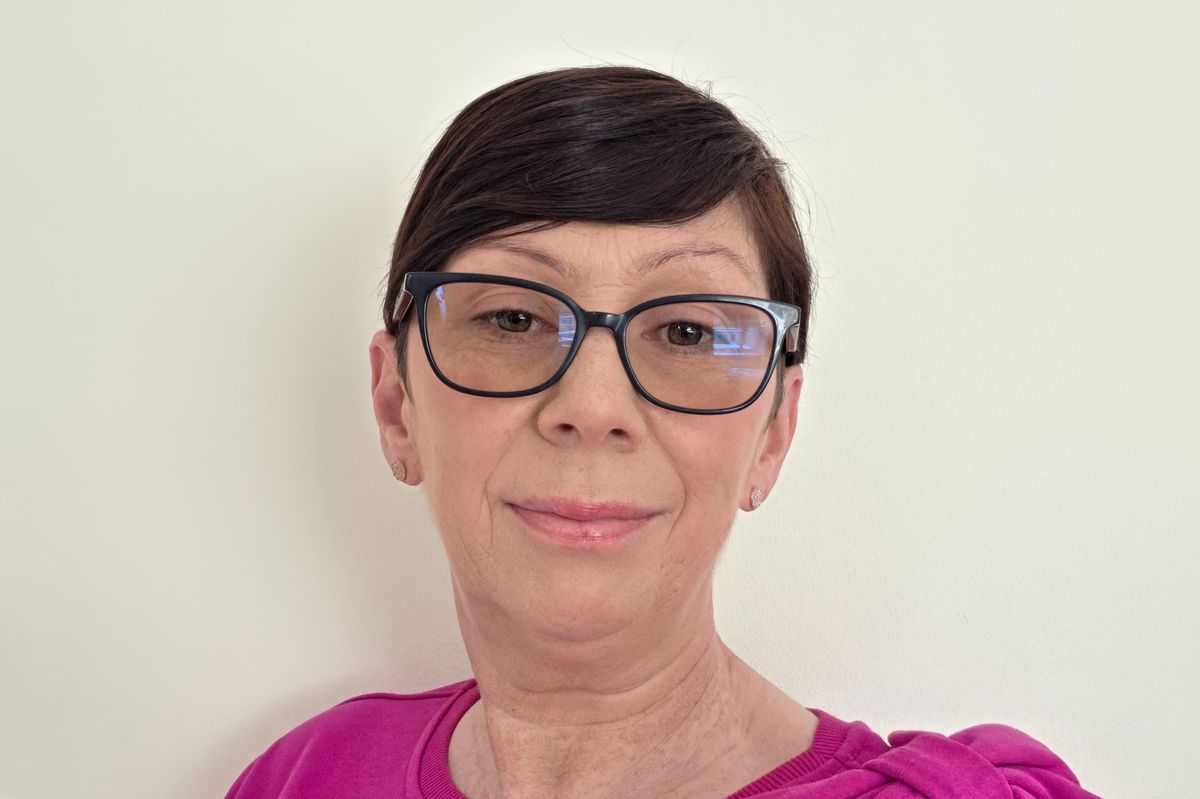
Mum of two Bridget Carr has opened up about being diagnosed with ovarian cancer and the challenges that came with it, admitting life now won’t 100% ever be the same

Bridget Carr
Mum of two Bridget Carr has opened up about being diagnosed with ovarian cancer, saying “it’s hard to go back to the person you were before”.
Bridget, from Limerick, was 42 years old when she found out she had cancer just before Christmas in December 2018 – initially going into hospital to have what she thought was an ovarian cyst removed.
During the surgery, however, doctors discovered her cyst was malignant and she ended up having both of her ovaries removed – putting her into immediate menopause.
Despite already having decided her family was complete – Bridget’s children were aged 15 and 10 when she was diagnosed – going into early menopause while also dealing with cancer treatment was a tough cross to bear for Bridget who works in administration in her husband’s building firm.
Bridget told Chic, “I was 42 (when diagnosed) and because they removed my ovaries in that surgery I was put into menopause overnight so I was recovering from extensive surgery, bigger than I thought, and dealing with menopause.
“We didn’t tell anyone about it before Christmas and then my parents were having a big party in February – they were married 50 years – so we held off and waited to tell everyone after that.
“That actually also gave us time to get our own heads around the diagnosis before we had to deal with the emotions of telling family.”
World Ovarian Cancer Day took place on Friday, May 8 with patient organisations, healthcare professionals, and advocates around the world uniting to raise awareness of ovarian cancer, improve understanding of symptoms, support women affected by the disease, and highlight the urgent need for earlier diagnosis, as ovarian cancer continues to be one of the most challenging cancers to detect early.
“My first symptoms was eating issues,” Bridget told us.
“I was eating very little and feeling very full very quickly and just feeling very uncomfortable when I did eat. I couldn’t digest certain foods like meat and harder things to digest.
“That was my first symptom, it was all got to do with my stomach.”
After noticing she was losing quite a bit of weight, Bridget went to her GP who referred her to a gastroenterologist.
“I was really struggling to eat, I was losing quite a bit of weight and originally I was told it was acid reflux so I was put on medicine for that.
“I was then sent to a gastroenterologist; I had a scope down but they couldn’t see anything.
“My symptoms by then were even worse, I was literally on a liquid diet, yoghurts and soup, little bits of fish – nothing that was too hard to digest – and eating little and often.
“I was in and out to my GP quite a lot and then I was referred to a second specialist. Again more tests were done and they couldn’t find anything wrong with my stomach either.
“It was at one point even insinuated that it was all in my head so I had kind of given up because they couldn’t find anything wrong and I was even starting to think myself that it was in my head.”
It was only when Bridget started having abdominal pain, “probably a year and a half to two years” after her first symptoms appeared that she returned to the doctor for more tests.
“I started having abdominal pain and issues around my cycle, my periods, that’s when I went back to my GP again and he referred me to a gynaecologist,” she said.
“When I went to the gynaecologist, he did a scan and saw a cyst on my ovary and he wasn’t too worried about it, he wasn’t concerned. He said some people get these cysts that come and go with your period and your cycle and sometimes they don’t burst.
“So he decided to put me on medication to try and get rid of the cyst and he told me to come back after six months and see how that goes but unfortunately my periods got really heavy and I had this really bad pain in my right side where the cyst was so I went back to him after three months and he did a scan and he said because the cyst is causing so much pain they’d have it taken out.
“But he said to me that he had a slot on December 21st but no-one wants to be in hospital around Christmas-time so did I want that and I said ‘yes’ and it was then when they opened me up to remove the cyst that they discovered that I had cancer.
“They couldn’t officially tell me but that was the day, December 21st, 2018.”
The diagnosis came as a huge shock for Bridget who, at this point, had been having health issues for around two years – but following her surgery she vowed to remain positive as she underwent chemotherapy
“I didn’t have time for anger over, ‘well I told you something was wrong but you didn’t listen’.
“Did I have anger, sometimes, but what’s done is done and me being angry was only going to weigh me down and it wasn’t going to help, and then I had family to think about so I just had to get on with it.”
Bridget is mum to two children, who were aged 15 and 10 when she was diagnosed and while she had no plans to have more children, waking up to find her ovaries were removed during surgery was a huge shock.
“You have to consent to these things going into surgery but you certainly don’t expect that both ovaries are going to go in that surgery so it was a shock to wake up to that,” she said.
“But I was 42 and our kids were 15 and 10 at the time so I didn’t have any plans for more children.”
Following a recovery period after her first surgery, Bridget underwent four cycles of chemotherapy before undergoing more surgery.
“I started my treatment in February because after your surgery you have to wait six weeks after that before you can start chemotherapy.
“So first I had four cycles of chemotherapy and then I went on and I had more surgery, cytoreductive surgery – a procedure aimed at removing all visible cancerous tumours within the abdomen, often used in cases of ovarian cancer – with HIPEC – where high doses of chemotherapy go directly into the abdomen – then I had two more cycles of chemotherapy.
“I finished all that on the 19th of September, 2019.”
Chemotherapy didn’t come without its complications for Bridget, who at one point found herself in the Emergency Department, having had a serious reaction to her chemotherapy protocol.
“First I had a reaction to one of the chemo drugs and ended up with a very serious anaphylaxis rash all over my body so I had to go to A&E,” she told us.
“So one of my chemotherapy drugs had to be stopped and then along the way my treatments were delayed because I kept having problems with my white blood count being too low. They have to be at a certain level.
“So I was on a three-week chemotherapy cycle but between my fifth and my sixth cycle, I had to wait five weeks.
“It was very frustrating.
“I think very naively – and they tell you not to do it and it’s something I tell people now – but when you’re given your timetable, ‘so this is the date you’re starting and you’re having treatment every three weeks’, you basically mark it on the calendar and go, right, I’m gonna be finished by this date, and when that doesn’t happen and things don’t go to plan, you do get frustrated because you want to be finished and you want to not be feeling miserable and sick and you want your life to get back to normal.
“And because of my white blood count issues I had to be really careful because it meant I was very susceptible to infections so I couldn’t do big crowds or be indoors with lots of people so the delays were incredibly frustrating.”
Initially following treatment, despite feeling relief, Bridget struggled with moving on.
“It’s a relief to be finished but for a long time afterwards any little niggle or ache you get, your mind automatically goes back to, is my cancer back?, or if you’re due a scan or check-up, you have anxiety that builds and you think, oh my god is this going to be the scan that says my cancer is back?, and there’s a certain trauma that comes with that.
“So while your treatment is finished and there’s no evidence of disease, it’s always there. Now, as the years go on, that gnawing feeling at the back of your mind gets less and less and it gets easier and easier but I don’t care what anyone says, life can never be the same again, it can’t be.
“You’ve been through so much it’s hard to go back to the person you were before.
“Now life goes back to normal and you go back to your kids’ routine and you go back to work and all those things but I can’t say it’s 100% ever the same.”
Since her diagnosis, Bridget has gone on to get involved with patient advocacy programmes, which she says she hopes goes in some small way to helping others who may one day find themselves in the position she once did.
“For me, I had gone and found a support group with monthly meetings where you met other people who had been through ovarian cancer and at one of them a PhD student from UCD presented her research and was looking for patients to get involved to help with her project and something about it just stuck with me and I got involved very slowly at first.
“But then, for me, the driving force behind it, there’s two: one is to try and raise awareness so other women and their families know the signs and symptoms of ovarian cancer – they’re so vague and people don’t understand them, they don’t know them. So many people asked me was I not going for my cervical screenings but they don’t pick up all the gynae cancers, ovarian cancer. So it was about getting that message out there, that any persistent changes you need to get checked out.
“And then the more recent side of things, I see so many women pass away from ovarian cancer and if telling my story or being involved helps shape research, that’s what drives me on so that’s why I got involved and stay involved. Trying to make it for people coming behind me that the research is better, the options are better.”
To support World Ovarian Cancer Day, which took place on May 8, individuals are encouraged to learn the symptoms, share the BEAT message, and support efforts to improve awareness and education around ovarian cancer worldwide. For more information, visit www.thisisGO.ie.
Want to see more of the stories you love from RSVP ? To add RSVP as a preferred source of news on Google, simply click here