India is preparing for one of the most ambitious offshore oil and gas exploration campaigns in its modern history as the Narendra Modi government shifts strategic focus toward domestic hydrocarbon reserves beneath the Bay of Bengal. The large-scale exploration push comes at a time when global energy politics has become increasingly unstable due to wars, sanctions, supply chain disruptions and fluctuating crude oil prices.
Government documents accessed by media reports show that the Directorate General of Hydrocarbons (DGH) has initiated plans for extensive marine seismic surveys across multiple offshore basins along India’s eastern coastline. The project will span nearly 150,000 line kilometres (LKMs) across the Bengal-Purnea, Mahanadi, Krishna-Godavari, Cauvery and Andaman offshore basins over the next two years.
The exploration campaign represents far more than a routine geological exercise. It signals a broader strategic shift in India’s energy policy, one aimed at reducing excessive dependence on imported oil and gas from politically volatile regions such as West Asia while strengthening domestic energy resilience.
Why India is looking beneath the Bay of Bengal
India currently imports nearly 85 per cent of its crude oil requirements and a substantial portion of its natural gas demand. This heavy dependence on foreign energy has repeatedly exposed the Indian economy to global geopolitical shocks.
Whenever conflict erupts in West Asia, crude oil prices rise sharply, directly impacting Indian fuel prices, inflation, transport costs and household expenses. The Russia-Ukraine war exposed the vulnerability of global energy supply chains, while tensions involving Iran, Israel and the Gulf region have once again highlighted the risks associated with overdependence on imported hydrocarbons.
MODI’S NEW PRIORITY. MEGA ENERGY HUNT IN BAY OF BENGAL. A SURVEY SPANNING A TOTAL OF 150, 000 LINE KILO METERS (LKMs). Confronted with an energy crisis and commited to girding itself against future energy shocks @AmanKayamHai_ reports that India is preparing one of its largest… pic.twitter.com/5CkI9Ei5XA
— Rahul Shivshankar (@RShivshankar) May 16, 2026
The Modi government looks determined to avoid future energy shocks by aggressively searching for domestic reserves capable of reducing import dependence over the long term.
The Bay of Bengal, especially India’s eastern offshore basins, has now emerged as the centrepiece of that strategy.
Unlike the western offshore region anchored around Mumbai High, India’s historic oil-producing giant, large sections of the eastern offshore remain relatively underexplored despite decades of geological indications suggesting strong hydrocarbon potential.
Officials quoted in reports believe that advances in seismic technology, deepwater mapping and marine geological analysis may now allow India to identify reserves that were previously inaccessible or poorly understood.
India’s largest offshore survey push in years
The scale of the planned operation is unprecedented.
According to government documents, the Bengal-Purnea and Mahanadi offshore surveys alone will cover around 45,000 line kilometres. The Krishna-Godavari Basin survey will span another 43,000 LKMs, while the Andaman Basin exploration will also cover nearly 43,000 LKMs. The Cauvery Basin will add another 30,000 LKMs to the total survey network.
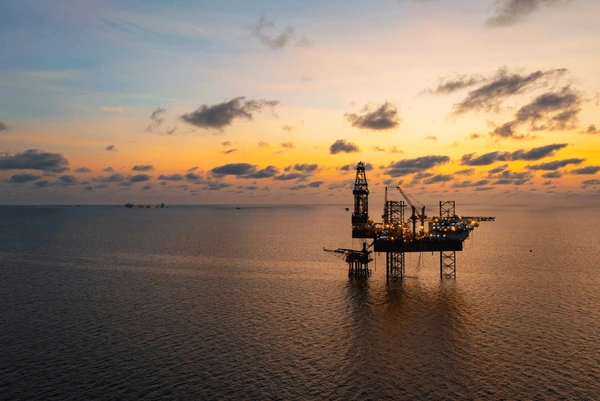
Specialised marine survey vessels equipped with advanced seismic technology will conduct the exploration exercise.
These vessels tow long streamer cables behind them and emit controlled sound-wave pulses deep into the seabed. The reflected echoes bouncing back from underground rock layers are then recorded and processed into detailed geological images, allowing scientists to identify sedimentary structures where hydrocarbons such as crude oil and natural gas may be trapped.
The project is officially termed “2D Broadband Marine Seismic & Gravity-Magnetic Data Acquisition, Processing and Interpretation,” but in practical terms it is a giant underground scan of India’s eastern offshore seabed.
The objective is to identify commercially viable hydrocarbon reserves buried beneath millions of years of sediment and tectonic formations.
Lessons from the Russia-Ukraine war and global oil shocks
India’s offshore exploration push cannot be separated from the geopolitical lessons of recent years.
The Russia-Ukraine war fundamentally altered global energy markets. Europe’s sudden effort to reduce dependence on Russian oil and gas triggered worldwide competition for energy supplies, resulting in price spikes and supply uncertainties across major economies.
India managed to shield itself partially by increasing discounted Russian crude imports, but policymakers clearly recognised the long-term risks of relying excessively on external suppliers.
Similarly, repeated tensions in the Gulf region, disruptions in the Red Sea shipping corridor and uncertainty surrounding Iran-related conflicts have exposed the vulnerability of global energy supply chains.
Every disruption in West Asia affects India because a large percentage of Indian crude imports travel through sensitive maritime chokepoints such as the Strait of Hormuz.
The Modi government’s eastern offshore exploration strategy appears designed partly as insurance against such future crises.
Domestic production may not eliminate imports entirely, but even moderate increases in indigenous oil and gas output can provide governments greater flexibility during international supply disruptions.
Strategic shift from West Asia to the eastern seaboard
For decades, India’s energy security calculations were centred largely around West Asian suppliers including Saudi Arabia, Iraq, UAE and Iran.
Now, the government appears increasingly focused on building a parallel domestic energy pillar anchored around the eastern seaboard and offshore deepwater reserves.
This shift carries strategic implications beyond economics.
The Bay of Bengal region is becoming geopolitically important due to growing Chinese maritime presence, Indo-Pacific competition and regional energy exploration activity involving Myanmar, Indonesia and Southeast Asia.
By intensifying offshore exploration along its eastern coastline, India is not merely searching for hydrocarbons but also deepening strategic engagement with the Bay of Bengal maritime zone.
The Andaman and Nicobar region, situated close to major global shipping lanes, holds particular strategic significance.
Andaman Basin: India’s high-risk, high-reward frontier
Among all the offshore basins being surveyed, the Andaman Basin is attracting the greatest strategic and geological interest.
Reports have long described the Andaman offshore zone as a potentially transformational hydrocarbon frontier due to its geological similarity with gas-rich regions of Myanmar and Indonesia.
Government papers reportedly note that the Andaman fore-arc basin contains significant Miocene-era gas formations analogous to hydrocarbon-producing belts in neighbouring Southeast Asian regions.
This has led many experts to classify the Andaman Basin as a “high-risk, high-reward” frontier.
Deepwater exploration in the Andaman region is technically complex, expensive and uncertain. Offshore drilling in such environments requires enormous capital investment, sophisticated equipment and long-term commitment.
However, if commercially viable reserves are discovered, the strategic payoff could be enormous.
The basin may hold large natural gas reserves, methane hydrates and untapped deepwater hydrocarbon systems that could significantly strengthen India’s energy position in the coming decades.
Gas hydrates, frozen methane trapped beneath the seabed, are particularly important because they are increasingly being viewed globally as a future unconventional energy source.
Eastern basins showing strong geological promise
The Bengal Offshore Basin is already considered highly promising due to thick sedimentary deposits exceeding 10 kilometres in some areas. Geological studies suggest the basin contains multiple hydrocarbon plays stretching from Eocene formations to more recent Miocene-age deposits. Several gas indications have already been reported during earlier studies.
The Mahanadi Basin is also emerging as a major target due to its deepwater reservoirs and biogenic gas systems. Officials believe the basin may hold commercially exploitable reserves spanning geological formations from the Pliocene to Cretaceous periods.
The Krishna-Godavari Basin, already one of India’s most important gas-producing regions, continues to attract intense interest because experts believe substantial undiscovered reserves may still exist in deeper offshore sections.
The Cauvery Basin, another historically productive region, is also expected to undergo fresh deepwater assessment as officials search for unexplored offshore hydrocarbon plays.
Energy security becoming national security
The Modi government increasingly view energy security as inseparable from national security.
India’s rapidly growing economy requires enormous energy consumption. As manufacturing expands, urbanisation accelerates and transport demand rises, the country’s energy needs are expected to grow sharply over the next several decades.
At the same time, geopolitical uncertainty is becoming the new global norm.
Wars, sanctions, maritime disruptions, trade restrictions and energy weaponisation are no longer isolated events but recurring features of the international system.
Against this backdrop, India’s offshore energy exploration drive reflects a long-term attempt to build strategic resilience.
Even partial success in discovering commercially viable reserves could reduce India’s import burden, strengthen foreign exchange stability, improve energy availability and enhance geopolitical flexibility.
The exploration campaign also fits within the Modi government’s broader push for strategic self-reliance across critical sectors.
A defining moment in India’s energy future
The coming two years may prove crucial for India’s long-term energy trajectory.
Beneath the waters of the Bay of Bengal, several kilometres below the seabed, India is searching not only for oil and gas but for strategic breathing space in an increasingly unstable world.
Whether the surveys eventually lead to major discoveries remains uncertain. Offshore exploration is inherently risky, expensive and unpredictable. Many basins globally produce disappointing results despite promising geological indicators.
Yet the decision itself signals an important shift.
India is no longer relying solely on imported energy and global market adjustments. Instead, it is investing aggressively in understanding and unlocking its own offshore potential.
The Bay of Bengal may now become the next major frontier in India’s quest for energy independence.