When an invader must have demolished a temple, perhaps he believed that he had not merely brought down stones, but had also defeated the memory, confidence, and faith of an entire civilization. Whether it was Khilji, Babur, Aurangzeb, or other invaders, they likely believed that their victory was permanent. The structures erected over temples were not merely architectural forms; they were symbols of a victor’s mentality. The message was clear: “Open your eyes and see what has been done to your deity, cultures and traditions.”
At that time, there was no need to hide anything. The victor displayed his conquest openly. Constructing a site of namaz or a symbol of authority at the very place where a temple once stood was not merely a religious act, but also a demonstration of psychological dominance. It served as a constant reminder to the defeated society of its loss.
Behind the invasions of medieval Muslim invaders was not only political conquest, but also an ideological worldview. Certain traditional concepts of Islamic jurisprudence (Fiqh), such as Dar-ul-Islam (lands under Islamic rule) and Dar-ul-Harb (lands outside Islamic rule), were used by invading rulers to provide religious legitimacy to their expansion. Within this mindset, establishing control over the religious symbols, temples, and cultural centers of the defeated society was projected as a public symbol of victory.
Yet the greatest characteristic of history is that it never truly disappears. Centuries pass, empires vanish, but the memory of a culture and the footprints of a civilization continue to survive in one form or another.
Today, India is a modern democratic nation. It is governed by a Constitution, possesses a judiciary, the Archaeological Survey of India, and systems for the scientific examination of historical facts. In such a scenario, a question naturally arises: if evidence regarding the original character of a site emerges, then why does there remain such unease around it? Why, even within a modern constitutional framework, is there insistence on preserving disputed structures?
The answer is not merely legal, but psychological as well. Because the “victor’s mindset” does not disappear merely with the loss of political power; it survives within mentalities. On the other hand, the “victim mindset” too is not merely a memory, but a part of historical experience. Kashi Vishwanath, Ayodhya’s Ram Mandir, Krishna Janmabhoomi, and Bhojshala have all emerged before us as symbols of this very conflict.
The ongoing dispute surrounding Bhojshala, and the Madhya Pradesh High Court’s verdict on it, are deeply connected to historical memory and the experience of civilizational conflict. One side views it as a question of cultural restoration, while the other remains unable to move beyond a victor-centric lens, regardless of what history or modern scientific inquiry may indicate.
The Struggle of Bhojshala: Not Just a Site, but a Reawakening of Memory
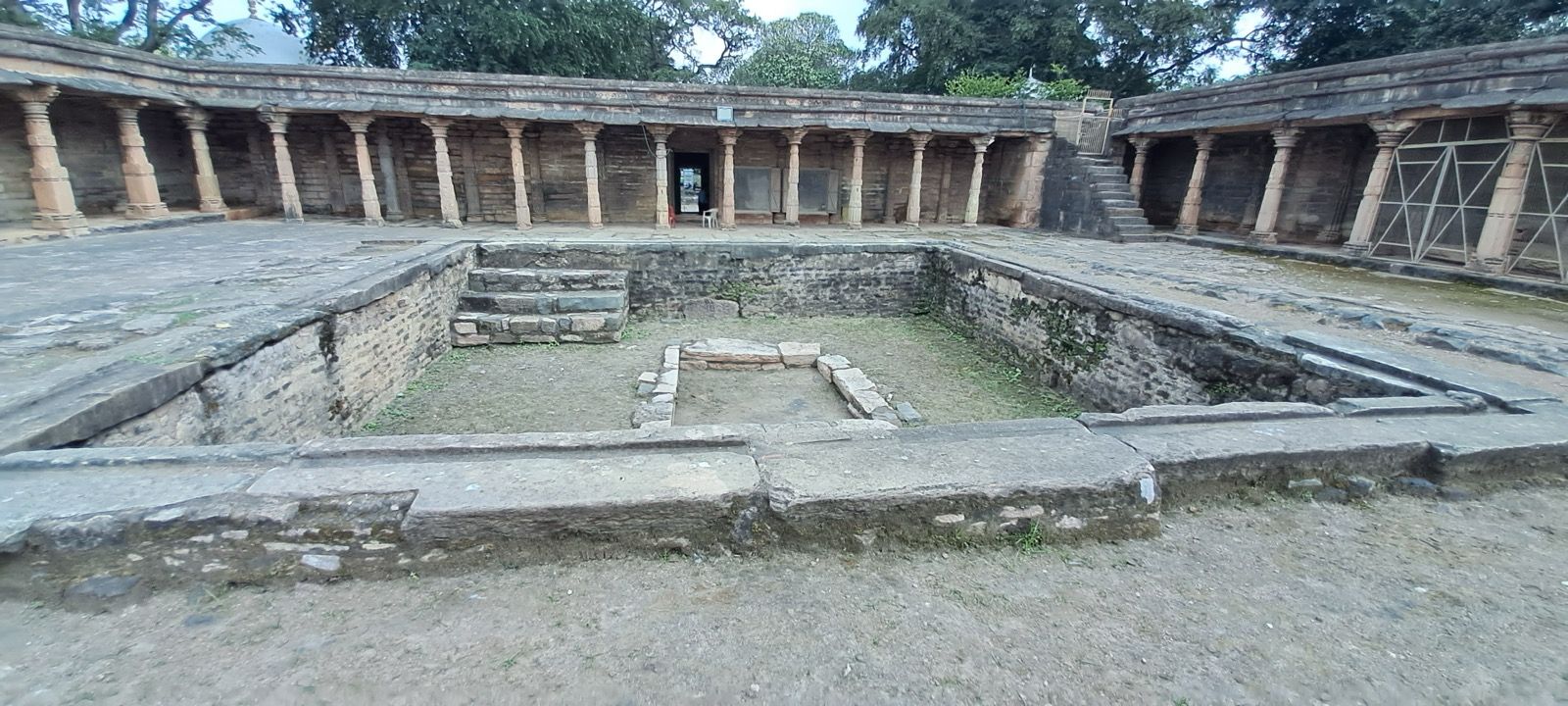
The history of Bhojshala is not merely about architectural transformation; it is also regarded as a symbol of civilizational conflict, cultural memory, and the victor’s mentality. According to historians and local traditions, this site was once a major center of learning, education, and the worship of Maa Saraswati.
According to historian Shivkumar Goyal, Bhojshala first suffered severe destruction during Alauddin Khilji’s invasion in 1305. It is said that the teachers and students there resisted the Islamic army. Around 1,200 students and teachers were captured and asked to accept Islam, but they refused. Thereafter, accounts mention that they were killed and their bodies thrown into the havan kund. This episode reflects the mentality of that era, where religious-political victory was not merely about changing rulers, but also about transforming symbols and traditions.
In the same sequence, the Bhojshala complex was gradually established as the “Kamal Maula Mosque.” This structure, named after the Sufi saint Kamal Maula, was given ideological and religious significance by the Khilji rulers. Later, references are found to Dilawar Khan Ghori constructing a mosque over the demolished portions. In 1514, during the reign of Mahmud Shah Khilji, the remaining parts of the complex were also converted into a mosque-like structure.
During excavations in 1875, a remarkably beautiful idol of Maa Saraswati was discovered here, which was taken to London by British officer Major Kincaid. Today, that idol is preserved in the British Museum. Even today, this idol is considered an important testimony to Bhojshala’s original identity and its cultural memory.
In 1952, the Maharaja Bhoj Smriti Basantotsav Committee began efforts for the liberation of Bhojshala. In 1961, archaeologist and historian Padma Shri Dr. Vishnu Shridhar Wakankar established that the idol of Maa Vagdevi existed in a London museum. After 1970, namaz also began within the premises, further complicating the dispute.
In 1992, on the occasion of Basant Panchami, Sadhvi Ritambhara initiated a new phase of the movement with a call for reciting the Hanuman Chalisa at Bhojshala. In 2000, the “Ghar-Ghar Devalaya” campaign created mass awareness, and in 2003, lakhs of devotees worshipped Maa Vagdevi.
The date February 6, 2003, became especially significant, as Basant Panchami and Friday coincided on the same day. The gathering of over one lakh Dharmarakshaks became a symbol of the resolve for Bhojshala’s liberation. Thereafter, the movement witnessed sacrifices and restrictive state actions, yet the struggle did not stop.
On April 8, 2003, after nearly 650 years, Hindus regained the right to worship and have darshan at the site. In 2016, the installation of Maa Saraswati’s image in the sanctum sanctorum and the commencement of yajna rituals began. Gradually, the right to worship for 52 days a year was secured.
In 2022, Hindu Front for Justice filed a petition in the Madhya Pradesh High Court demanding a scientific survey. On March 11, 2024, the High Court directed the ASI to conduct a complete survey of the complex. During the nearly 98-day survey conducted from March to June 2024, the ASI indicated—based on inscriptions, sculptures, architectural remains, and epigraphic evidence—that the current structure had been built from the remains of pre-existing temples. The Muslim side objected to these findings.
On January 22, 2026, the Supreme Court permitted the sealed report to be opened and allowed all parties to file objections. In April-May 2026, the High Court heard arguments from all sides, and on May 15, 2026, the judgment was delivered. In a major and historic ruling, the Indore Bench of the Madhya Pradesh High Court recognized Bhojshala as the “Vagdevi Temple” and stated that the Hindu side should have full rights to worship there.
The Convergence of Victimhood and Victorious Mindset
The most complex aspect of the Bhojshala dispute is that two mentalities appear to exist simultaneously. On one side is a society that believes its faith, temples, and cultural identity were attacked. For them, Bhojshala is not merely a stone structure, but a question of historical pain and cultural restoration. Therefore, they view their struggle as the “return of justice.”
On the other hand, when courts or scientific surveys produce indications supporting historical claims, the other side responds not only with opposition, but also with a sense of “victimhood.” This sense of victimhood itself stems from the victor’s mentality, rooted in the belief that civilizations and cultures like Bhojshala were conquered through their might.
This contradiction makes the entire discourse even more complex. The side that stood for centuries alongside symbols of conquest now also presents itself as insecure or victimized within the modern constitutional process. This raises a deeper question: is the dispute truly only about land? Or is it also a struggle over history, identity, memory, and psychological dominance?
The Bhojshala issue is not merely a dispute over a religious site. It has now become a subject where India’s civilizational memory, historical justice, and modern constitutional order converge. History is not resolved through revenge, but through truth and justice. Yet even when truth emerges, if society cannot move beyond its “victim” and “victor” mindsets, then the conflict continues not only in courts, but also within mentalities.
The struggle of Bhojshala is the story of this deep Indian dilemma—where one civilization is re-reading its past, while on the other hand, the legacy of history continues to shape the politics and psychology of the present.
Dr. Alok Kumar Dwivedi, Assistant Professor, Philosophy, Lucknow