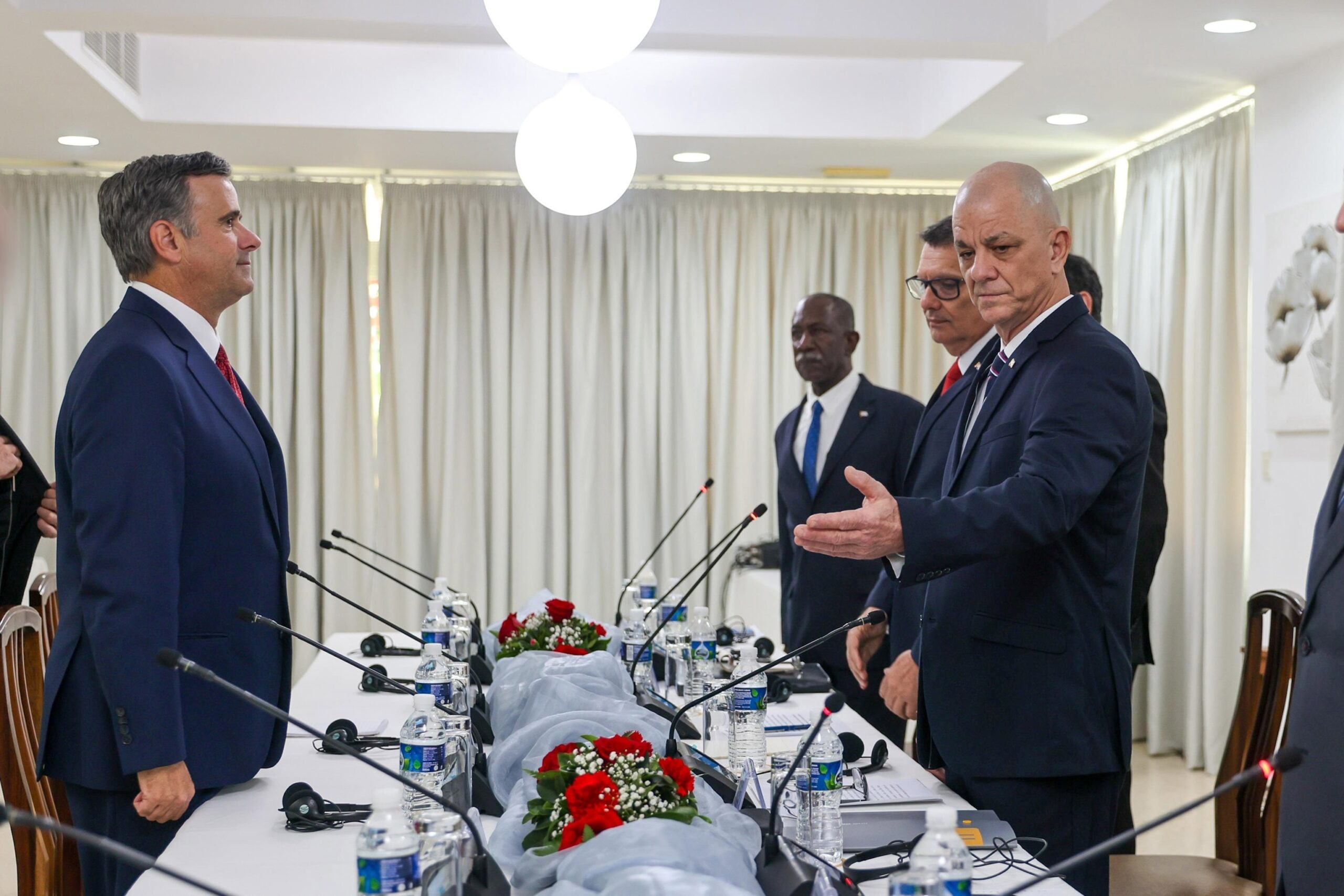
CIA Director John Ratcliffe met with top Cuban officials in Havana on Thursday, a CIA official said, in a surprise visit that comes amid extraordinary tension between the two countries.
“Today, Director Ratcliffe met with Cuban officials, including Raulito Rodriguez Castro, Minister of Interior Lazaro Alvarez Casas, and the head of Cuban intelligence services in Havana to personally deliver President Trump’s message that the United States is prepared to seriously engage on economic and security issues, but only if Cuba makes fundamental changes,” a CIA official said in a statement.
During the meeting, Director Ratcliffe and the Cuban officials discussed intelligence cooperation, economic stability and security — “all against the backdrop that Cuba can no longer be a safe haven for adversaries in the Western Hemisphere,” the official said.
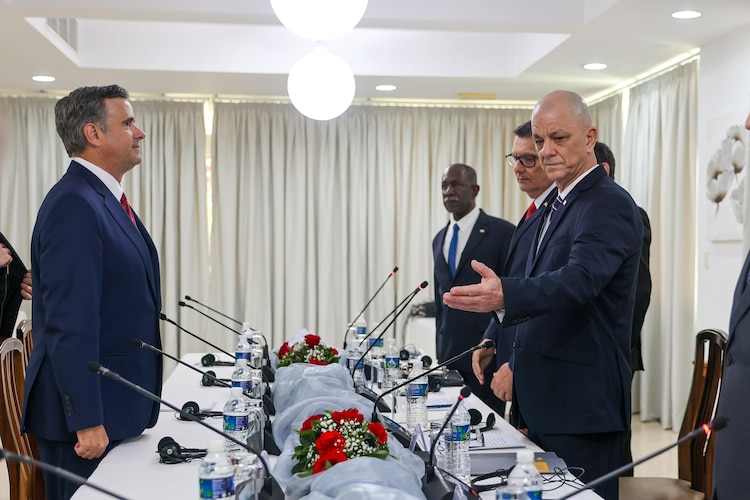
CIA Director John Ratcliffe meets with top Cuban officials in Havana.
CIA
In a statement read on the air by the state broadcaster, the Cuban government confirmed the meeting, saying the U.S. requested it.
“The information provided by the Cuban side and the discussions held with the U.S. delegation made it possible to categorically demonstrate that Cuba does not constitute a threat to U.S. national security, nor are there legitimate reasons to include it on the list of countries that allegedly sponsor terrorism,” the Cuban government said in its statement.
Emboldened by the U.S. raid that led to the capture of ousted Venezuelan leader Nicolas Maduro earlier this year, President Donald Trump has increasingly turned his attention to a maximum pressure campaign on Cuba, warning of imminent action for months.
In recent weeks, Trump has said that Cuba’s political system needs to change “dramatically” and has repeatedly declared that the U.S. will be “doing something with Cuba very soon.”
Earlier this month, while speaking in Florida last week, Trump said that after the operation in Iran, “Cuba is going to be next,” and that the U.S. will be “taking over Cuba almost immediately.”
So far, the administration has relied on economic tactics to pressure Cuba. In January, Trump announced a plan to impose additional tariffs on countries that provide oil to Cuba, declaring a national security emergency regarding the island nation.
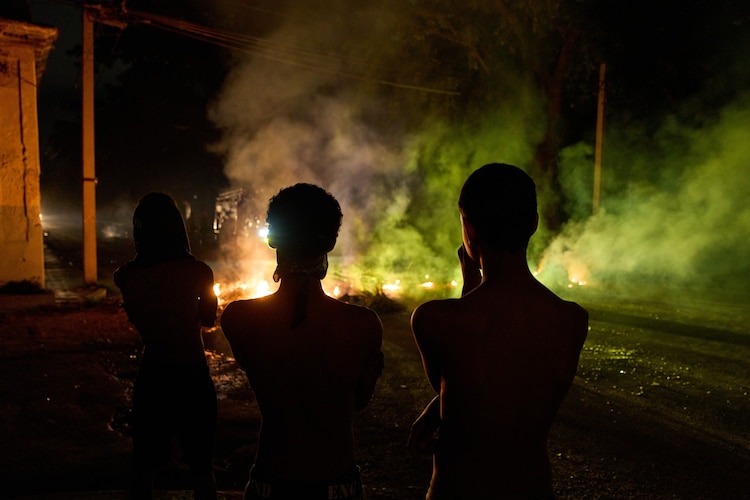
People look at a barricade set up by residents protesting against prolonged power outages in Havana, Cuba, Wednesday, May 13, 2026.
Ramon Espinosa/AP Photo/Ramon Espinosa
The blockade, cutting off Havana’s access to foreign oil shipments, has deepened an energy crisis on the island, pushing the county’s power grid near collapse, with massive blackouts.
On Thursday, amid the latest power failure, Cuban Energy Minister Vicente de la O Levy called the situation with the national electrical system “critical” and said, “We have absolutely no fuel; we have absolutely no diesel.”
Earlier this month, the Trump administration imposed new sanctions aimed at members of the regime that the White House said were “complicit in government corruption or serious human rights violations, or are agents, officials, or material supporters of the Cuban government,” according to a fact sheet published by the White House.
In an interview with ABC News last week, Cuban Foreign Minister Bruno Rodriguez warned that the U.S. was on a “dangerous path” that could lead to a “bloodbath in Cuba” in response to Trump’s continued rhetoric about taking over the country, and said there had been “no progress” in talks between the two countries.