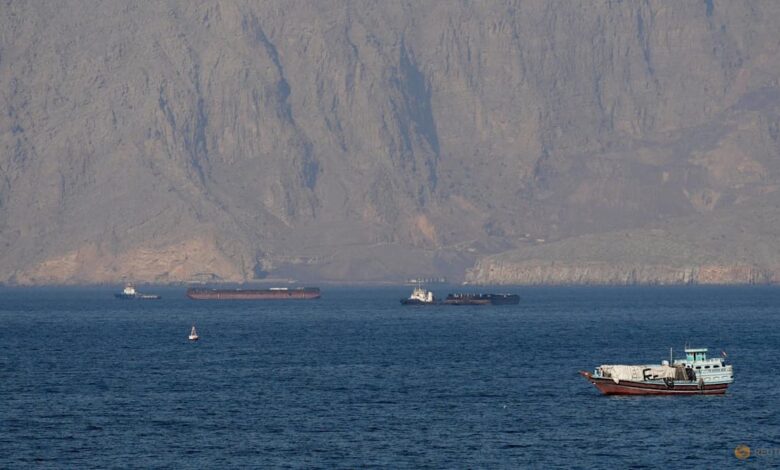
DUBAI: Iran said it had forced a United States warship to turn back from entering the Strait of Hormuz on Monday (May 4), but a US official denied a report that it had been struck by Iranian missiles, according to an Axios journalist.
Iran’s navy said it had prevented “American-Zionist” warships from entering the Strait of Hormuz area by issuing a “swift and decisive warning”.
Iran’s semi-official Fars news agency said two missiles had hit the warship near the port of Jask at the southern entrance to the strait, where Iran’s navy has a base, but a senior US official immediately denied the report, Axios’ Barak Ravid said.
Reuters could not independently verify the reports.
Iran had warned US forces on Monday not to enter the strategic waterway after President Donald Trump said the United States would “guide out” ships stranded in the Persian Gulf by the US-Israeli war on Iran.
Trump gave few details of the plan to aid ships and their crews that have been confined to the vital waterway and are running low on food and other supplies more than two months into the conflict.
“We have told these Countries that we will guide their Ships safely out of these restricted Waterways, so that they can freely and ably get on with their business,” Trump said in a post on his Truth Social site on Sunday.
In response, Iran’s unified command told commercial ships and oil tankers to refrain from any movement that was not coordinated with Iran’s military.
“We have repeatedly said the security of the Strait of Hormuz is in our hands and that the safe passage of vessels needs to be coordinated with the armed forces,” Ali Abdollahi, head of the forces’ unified command, said in the statement.
“We warn that any foreign armed forces, especially the aggressive US Army, will be attacked if they intend to approach and enter the Strait of Hormuz.”
Iran has blocked nearly all shipping into and out of the Gulf apart from its own since the start of the war, cutting off around a fifth of the world’s oil and gas shipments and sending oil prices soaring by 50 per cent or more.
US Central Command (CENTCOM), which for its part is blockading Iranian ports to put pressure on Tehran, said it would support the rescue effort with 15,000 military personnel and more than 100 land- and sea-based aircraft, plus warships and drones.
“Our support for this defensive mission is essential to regional security and the global economy as we also maintain the naval blockade,” Admiral Brad Cooper, the CENTCOM commander, said in a statement.